TL;DR
- QSR digital transformation works best in stages: start where the pressure is highest, which for most QSRs is the drive-thru order point at the busiest hour.
- Get the foundation right first. Orders from the lane need to reach your POS in real time, with itemization, modifiers and pricing intact.
- Prove results in one lane, measure completion AND accuracy together, then roll out in stages. Hi Auto processes 100M+ orders per year and reports 93%+ completion AND 96% accuracy.
- A pilot can be live in ~8 weeks, and the path from pilot to scale takes 90-120 days.
Picture the meeting. There is a slide on the screen with fourteen technology initiatives, and someone asks the question nobody wants to answer: which one goes first?
That moment is where many plans for QSR digital transformation stall. A list of tools treats every problem as equal, and they are not. This guide gives you a sequence instead. It starts with the busiest hour and works backwards.
What does digital transformation mean for a QSR?
For a QSR, digital transformation means replacing manual, variable processes with technology that makes each location faster, more consistent and easier to staff. It is a sequence of projects, and the output of each one becomes the foundation for the next.
This guide stays with the drive-thru and the order point, where the pressure is highest and the return on a well-placed first project is easiest to see. Other digital projects, such as back-office systems and inventory, matter too, and they are a separate conversation.
Why is the drive-thru the right place to begin?
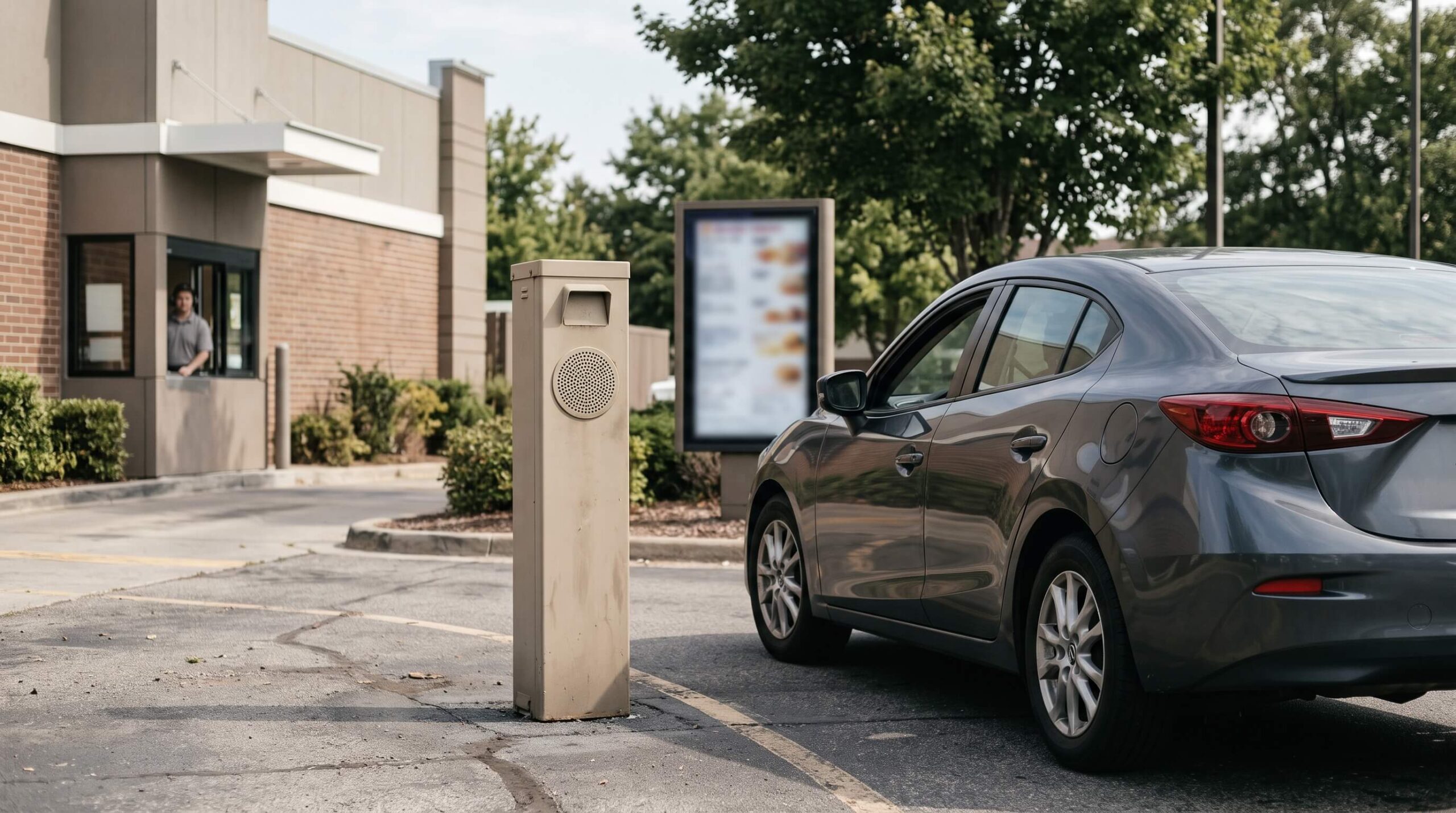
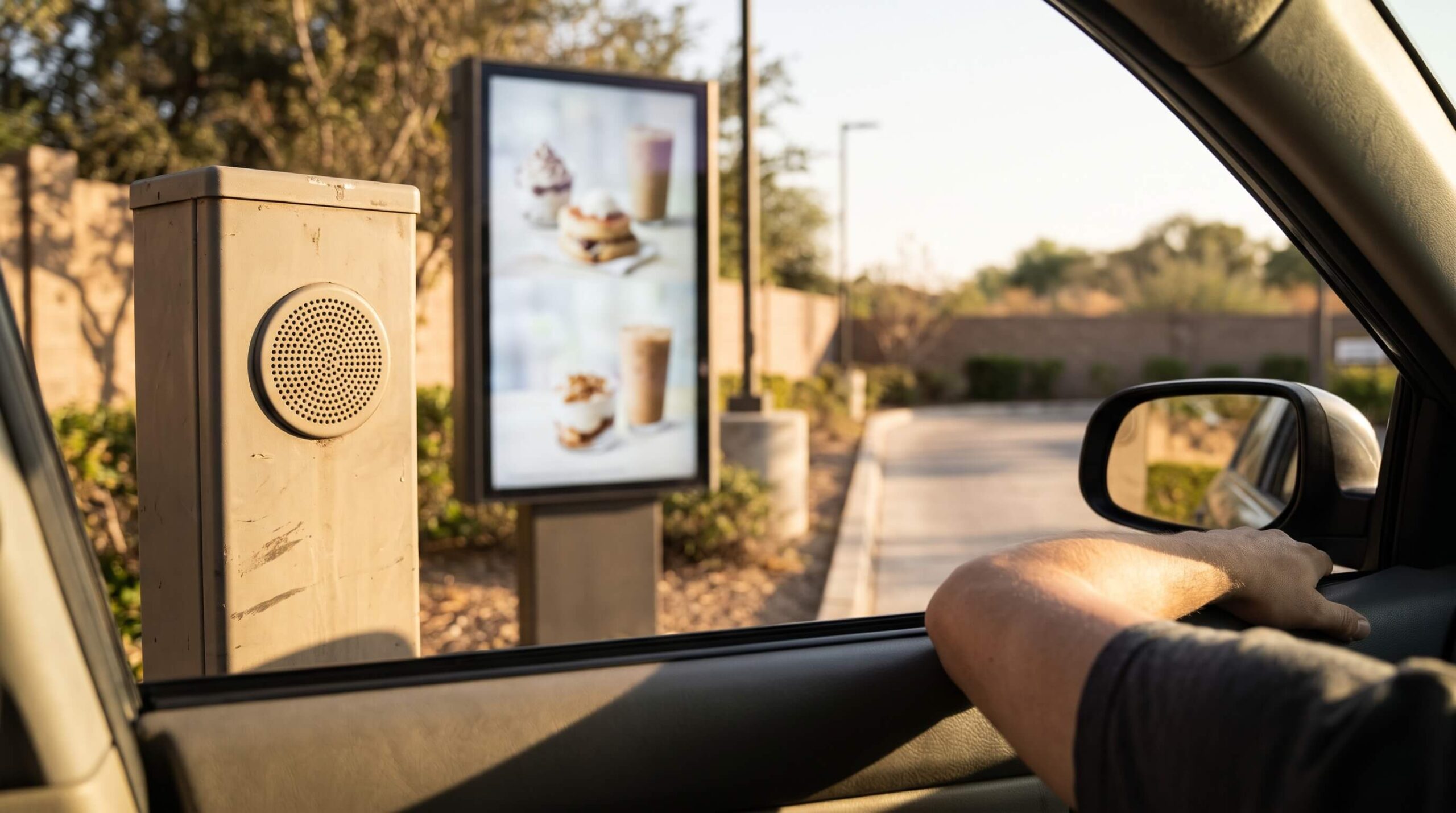
Think about the order point during your busiest hour. One person is on the headset taking an order, watching the kitchen, keeping an eye on the window and handling payment, all at once. The station stacks four jobs into one position, and that design creates the load. It has little to do with anyone’s effort.
Technology investment makes the most immediate difference there. The National Restaurant Association’s State of the Restaurant Industry 2026 report, covered by Restaurant Dive (Julie Littman, 18 February 2026), found that six in 10 operators plan to invest more in technology to improve the customer experience. The same report found that only 6% of restaurants use AI for customer orders.
That gap between intent and action is wide. Operators who sequence their first project well are the ones who close it.
Get the foundation right: POS and data first
For any AI project in the lane, the first question is whether your foundation can carry it.
The 2026 Restaurant Technology Outlook survey from Informa Foodservice, covering nearly 500 foodservice operators and reported by Nation’s Restaurant News (Joanna Fantozzi, 3 March 2026), found that 53% of operators prioritized point-of-sale systems this year, up from 40% last year. One in five said data silos among vendors are one of the biggest tech stack challenges in 2026.
Here is what that means for the lane. When an AI order taker captures a guest’s order, the order has to reach the POS in real time, with itemization, modifiers and pricing intact. That is what POS integration means in practice. If the connection is slow or incomplete, the kitchen falls behind and the crew has to step in to fix things.
Menu and price changes need to stay in step as well. On the Hi Auto side, new menu items are set up by the Hi Auto team, which keeps the menu at the speaker accurate and in step with the POS. A stale menu means wrong prices at the speaker, and that erodes trust quickly.
Before you pick a first project, confirm two things: your POS can receive orders in real time, and your vendors share data cleanly.
Put the first project where the pressure is highest
The order point is the most loaded place in the lane, which makes it the right place to start. At the speaker, one person is holding a conversation, confirming accuracy, timing the kitchen and keeping the line moving. That combination creates variability across hundreds of orders, hundreds of locations and hundreds of days. It shows up in accuracy, speed and ticket size.
Drive-thru automation goes after that load. The case for starting here is concentrated return: fix the highest-pressure point first, and the gains are easiest to see and measure.
The kind of AI you choose matters. A real lane brings noise, accents, menu complexity and the pace of a Friday at noon. Ask every vendor to show how their system performs under those everyday conditions, not only in a demo.
Before you evaluate a single vendor, confirm three things are in place: a POS system, a drive-thru audio system and reliable internet. Then ask every vendor the same questions:
- Does the system manage the whole conversation? That means greeting, order capture, clarification, confirmation and hand-off to the POS.
- Does it work with the POS you run today? Ask for the current list of supported POS platforms.
- How does it handle menu changes and limited-time offers? Ask whether someone must update each store by hand.
- Can it take orders in Spanish? Hi Auto handles English and Spanish with auto-detect and can switch mid-order.
The Hi Auto product page shows how these requirements are met in practice.
Run it as an operations project
Technology projects stall when they sit only with IT. Bojangles took a different route. Richard Del Valle, Chief Information Officer and Chief of Staff at Bojangles, described it:
“I think it really has been a wonderfully collaborative effort here at Bojangles because we’ve never treated this as an IT project. This has been a Bojangles project from day one all-inclusive including our franchise partners and our franchise business consultants and the team that helps franchises be successful.”
Richard Del Valle, Chief Information Officer and Chief of Staff, Bojangles. QSR webinar “AI Order Taker That Works: The Bojangles Model”, July 2025. Watch the Richard Del Valle clip on Hi Auto’s videos page
The lesson applies to any chain. Bring operations, IT, franchisees and the people who support them into the project on day one. Corporate can keep brand standards while franchisees adjust for local needs, and that balance of franchise flexibility is easier to build early than to repair later.
Buy-in at the top came from proof, not a pitch. Jose Armario, CEO of Bojangles, described how his own COO came around:
“One of our biggest skeptics was our COO, and he was not in a hurry to do this because he watches our bottom line very carefully. It took us a second to figure it out… Now our COO is pushing us to get it in all restaurants.”
Jose Armario, CEO, Bojangles. QSR webinar “AI Order Taker That Works: The Bojangles Model”, July 2025. Watch the Jose Armario COO clip on Hi Auto’s videos page
Bring the crew and the guests along
Crews often worry about what new technology means for their jobs, and it is sensible to plan for that. Jose Armario, CEO of Bojangles, recalled how it went in his stores:
“At the beginning of this venture I think we were all a little surprised at how nervous the team members were about potentially losing their jobs… and I don’t think it took more than 48 hours for them to go, ‘Love BoLinda. She’s my best friend.'”
Jose Armario, CEO, Bojangles. QSR webinar “AI Order Taker That Works: The Bojangles Model”, July 2025. Watch the Jose Armario team reaction clip on Hi Auto’s videos page
What lifts the worry is seeing what the AI does: it takes the most demanding station off the crew’s plate, so people can focus on food and hospitality. That shift takes a decision. Saved time only turns into better hospitality and food quality when someone decides where it goes.
Hi Auto reports 3-8 labor hours saved per store per day, and Hi Auto customers report turnover reductions of 17-25% after deployment. These are Hi Auto’s numbers, and they are per store. Decide before go-live how you will use the time.
Guests are ready too. The National Restaurant Association report found that roughly six in 10 millennials and Gen Z adults said they would place an order with an AI-generated bot. The crew transition is the change that needs the most care.
Measure what counts, then roll out in stages
Two metrics matter most, and they only mean something together. Completion rate is the percentage of orders sent to the POS without staff intervention. Order accuracy is the percentage of orders sent to the POS with every item and customization exactly right. A high completion rate with poor accuracy sends wrong orders to your kitchen faster.
Across 100M+ orders processed per year and more than 1,000 stores, Hi Auto reports 93%+ completion AND 96% accuracy, averaged across all live stores. Hi Auto’s Buyer’s Guide sets 90% completion as a minimum threshold and advises buyers to ask every vendor for their measurement methodology.
Four questions help you tell vendor numbers apart:
- How do you define completion? Ask exactly what is counted.
- How many stores does the number cover? A figure from a few pilot sites says little.
- Is it averaged across all live stores or a chosen few?
- What period does it cover? One strong week is not a track record.
Reliability at scale is what separates a promising pilot from a chain-wide result, so test at your own scale, with your own menu and your own crews.
Hi Auto’s rollout follows four steps: System Buildup, Performance Optimization, Business Optimization and Rollout at Scale. A pilot can be live in ~8 weeks, and the path from pilot to scale takes 90-120 days. Data moves you from one step to the next. When a store’s numbers hold, you widen the circle.
Four mistakes to plan for
Most stalls come from things that were predictable and simply were not planned. None of them is anyone’s fault.
- Treating AI as plug-and-play. Voice AI for the drive-thru needs installation, POS integration, menu setup, staff training and a ramp-up period in the live lane. Plan for weeks to go live.
- Not preparing staff or guests. Brief the team before go-live on what the AI handles and what their role becomes.
- Not redeploying saved time. Freed labor hours become better hospitality or food quality only when someone decides where they go.
- Treating vendor numbers as equal. A completion figure from more than 1,000 stores is a different claim from the same figure from three stores, and both need an accuracy number beside them. Ask for the store count, the method and the period.
The shift in thinking: transformation is a series of small proofs
No single moment turns a QSR into a digitally transformed operation. It happens in stages, and each stage earns the next.
The first proof is a store where completion and accuracy hold. The second is a group of stores where the numbers travel. The third is the chain. Every decision builds on the one before it.
The sequence is simple to state: get the POS foundation right, put the first project at the order point, run it as an operations project with crews and franchisees inside it, measure completion AND accuracy together, and roll out in stages.
Next step: read the Buyer’s Guide and plan your first lane
Read the Hi Auto Buyer’s Guide and its evaluation matrix, then talk to the Hi Auto team about your first lane. The matrix gives you a checklist of vendor questions, including how each vendor measures completion and accuracy.