TL;DR
- Brand voice is controlled everywhere in QSR marketing except the one place a guest actually talks to the brand: the drive-thru speaker.
- Greeting, tone, and upsell consistency vary by store and shift today because the ordering moment has no tooling, review cycle, or visibility layer behind it.
- Centralized AI order taking lets corporate configure and push scripts, voice, and upsell behavior chain-wide, while franchisees keep local flexibility on menu and promotions.
- Hi Auto delivers a consistent upsell on 100% of orders and, across roughly 1,000 stores, holds 93%+ completion and 96% accuracy.
- What’s measurable today is execution consistency (greeting, upsell, store-to-store variance), not guest sentiment, which remains a separate, unresolved question.
Walk into any QSR marketing meeting and you will find a team that has controlled brand voice down to the pixel. Packaging is approved. Ad copy is approved. Store design, app language, even the font on the receipt, all governed by a brand standard someone fought hard to protect.
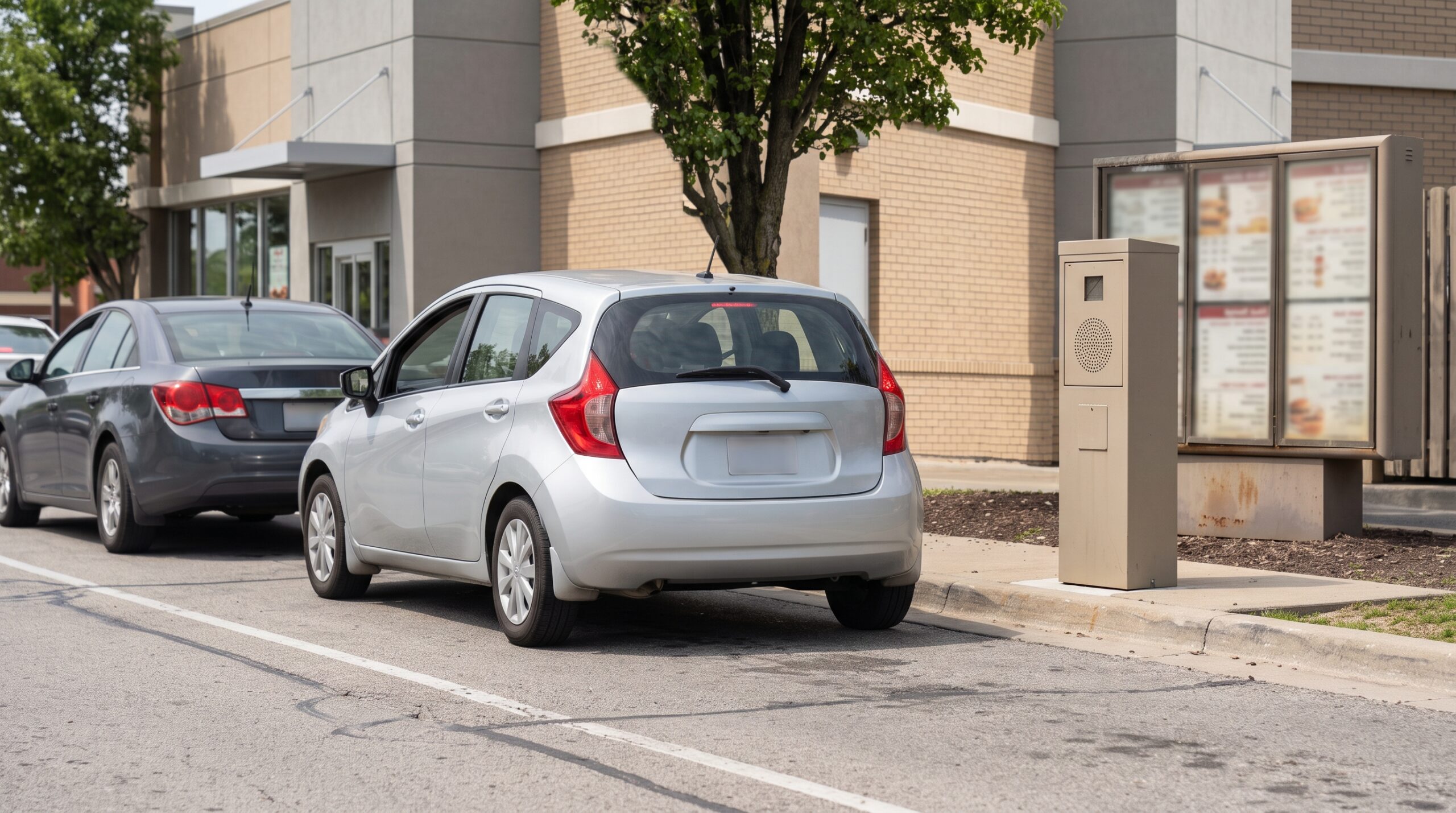
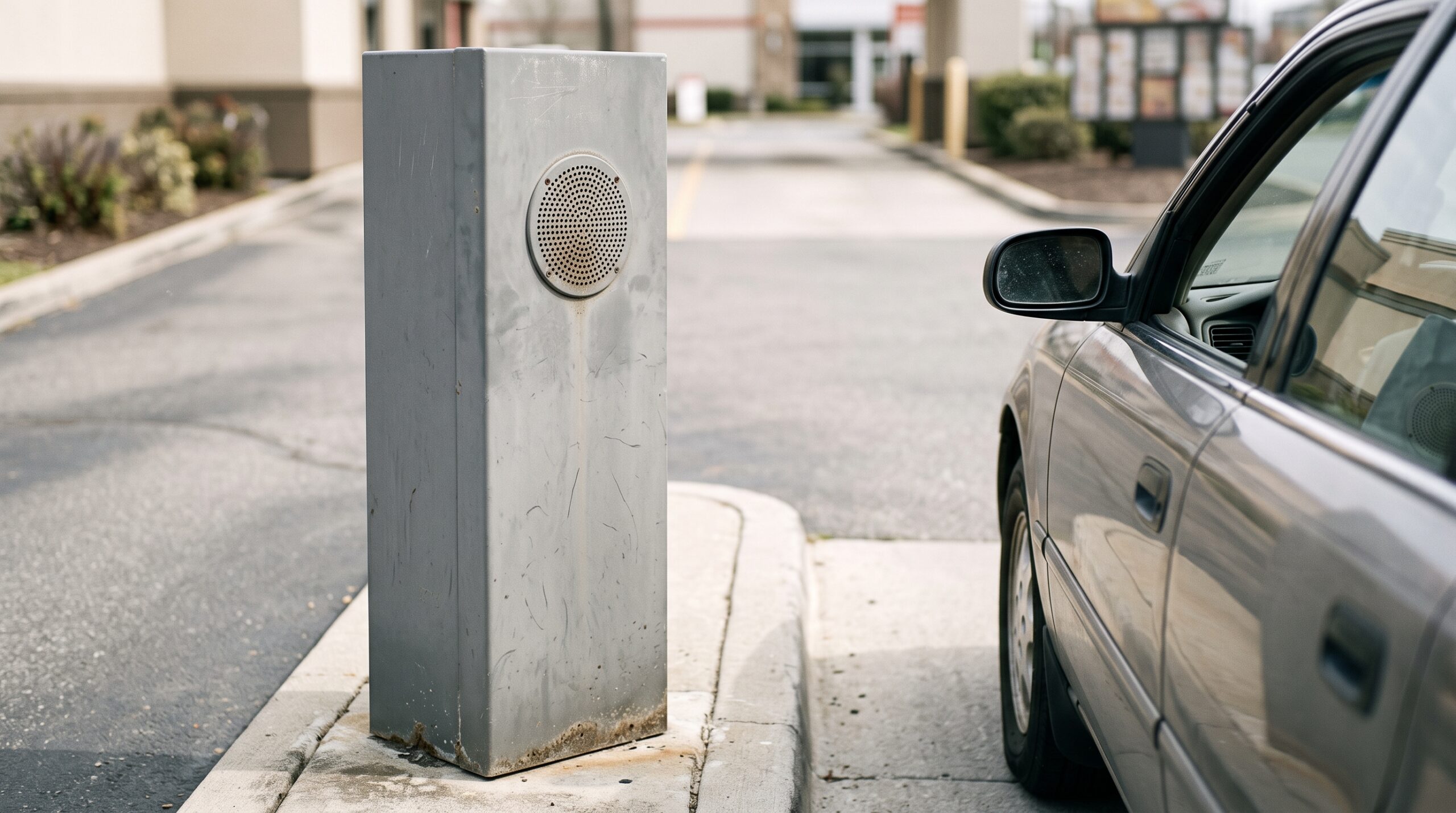
Then a guest pulls up to the speaker.
What they hear next is the one part of the brand that never got a system built for it. Packaging has a proofing process. Ad copy has a review cycle. The ordering moment has no tooling behind it, no review loop, and no visibility layer, so its output moves with conditions in the store: order volume, how many things are happening at once, what the lane looks like at that hour. The one moment where a guest actually has a conversation with the brand is the one moment corporate can neither configure nor see. That is the governance gap this piece is about: whether brand consistency is being enforced at the one touchpoint that was never given the means to hold it.
What inconsistency actually costs
The cost of that gap shows up in specifics.
The greeting varies by store and by daypart, because nothing in the operating model holds it in place. Upsell prompts vary the same way. They live in a training document rather than in a system, so whether one gets made depends on how busy the lane is and what else the store is handling in that minute. Tone varies too, quicker at a location working through a lunch rush, steadier at one that is not, same brand, same menu, same signage out front.
Corporate usually has no visibility into any of it. There is no dashboard for “how did the greeting sound at store 212 this morning.” Marketing can audit a billboard. It cannot audit a headset.
One operator described what the upsell half of that gap looked like at his own chain, comparing what the ordering moment produced before AI order taking with what it produces now:
“You might get an upsell 20% of the time with humans in the Drive-Thru. With Hi Auto, our voice order taking partner, we’re getting it 100% of the time.”
Ryan Weaver, CEO, Lee’s Famous Recipe Chicken. Nift “Marketing Bites: Restaurant Growth Unwrapped” podcast, Ep. 32, 1 April 2025. Watch the clip
Weaver is describing his own chain’s experience rather than an industry benchmark, and the spread he describes belongs to the operating model, not to the team members working inside it. A brand standard that lives only in a training document has to be carried by hundreds of separate shifts with no tooling underneath it, and with no visibility until a mystery shopper report or a customer complaint surfaces the gap weeks later.
Why this is harder in a franchise system
Corporate sets the standard. Franchisees run the stores. That split is the entire business model, and it is also where consistency dies.
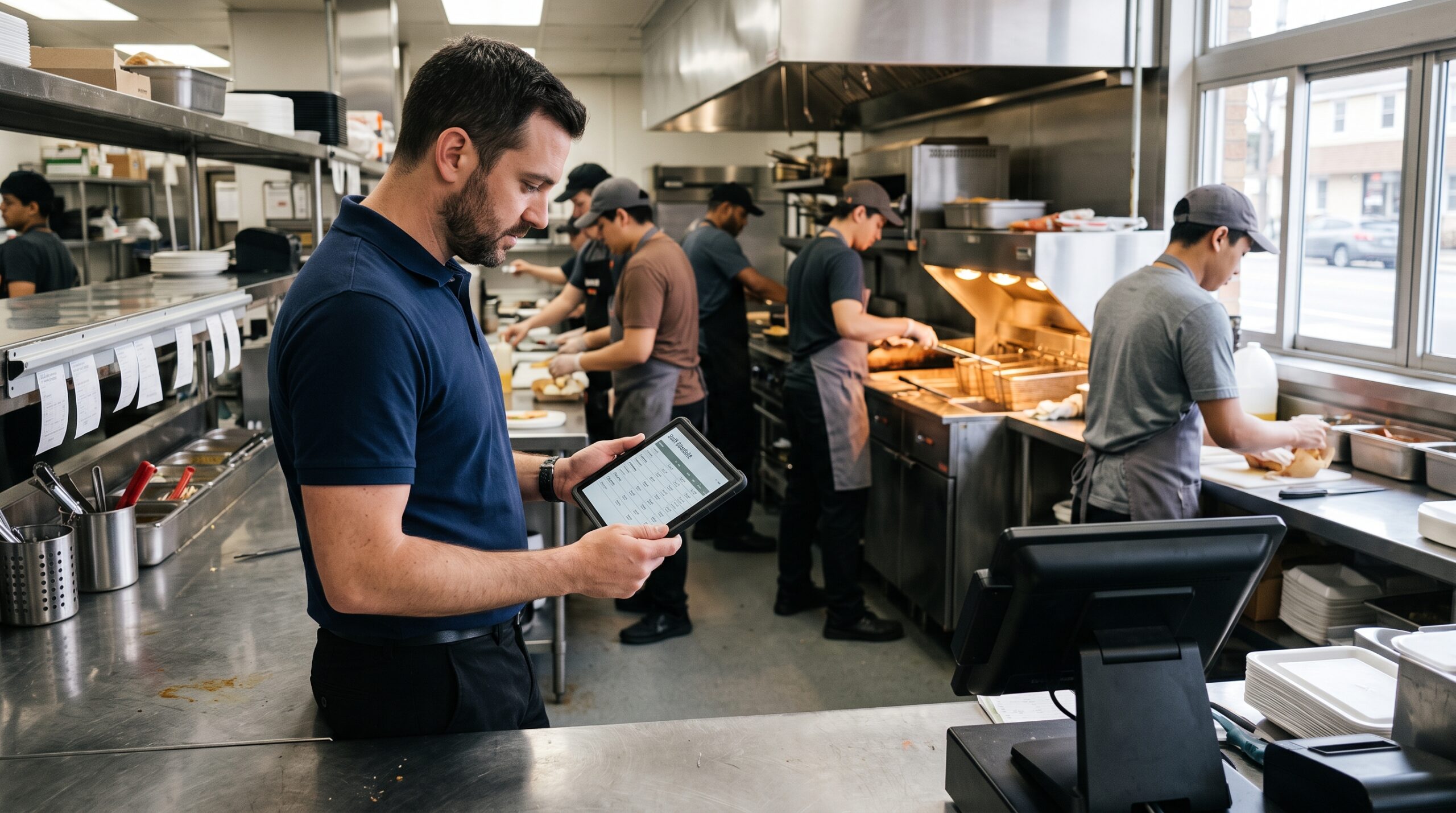
A brand standard is a document. Execution is what happens at store 340, on a Friday night, during a rush, in a store that has hired and trained new team members since the standard was last reviewed. Corporate can write the greeting script. It has no mechanism for delivering that script into every lane. The distance between the standard and the store is where voice, tone, and upsell consistency quietly drift, one shift at a time, across hundreds of locations that all technically operate under the same brand.
This is the structural problem a franchise COO actually owns. Everyone has good brand guidelines. The harder question is how you know they are being followed at store 340, tonight, without being there.
What centralized voice control changes
This is where AI order taking changes the equation: it finally gives the ordering moment the same kind of tooling every other touchpoint already has.
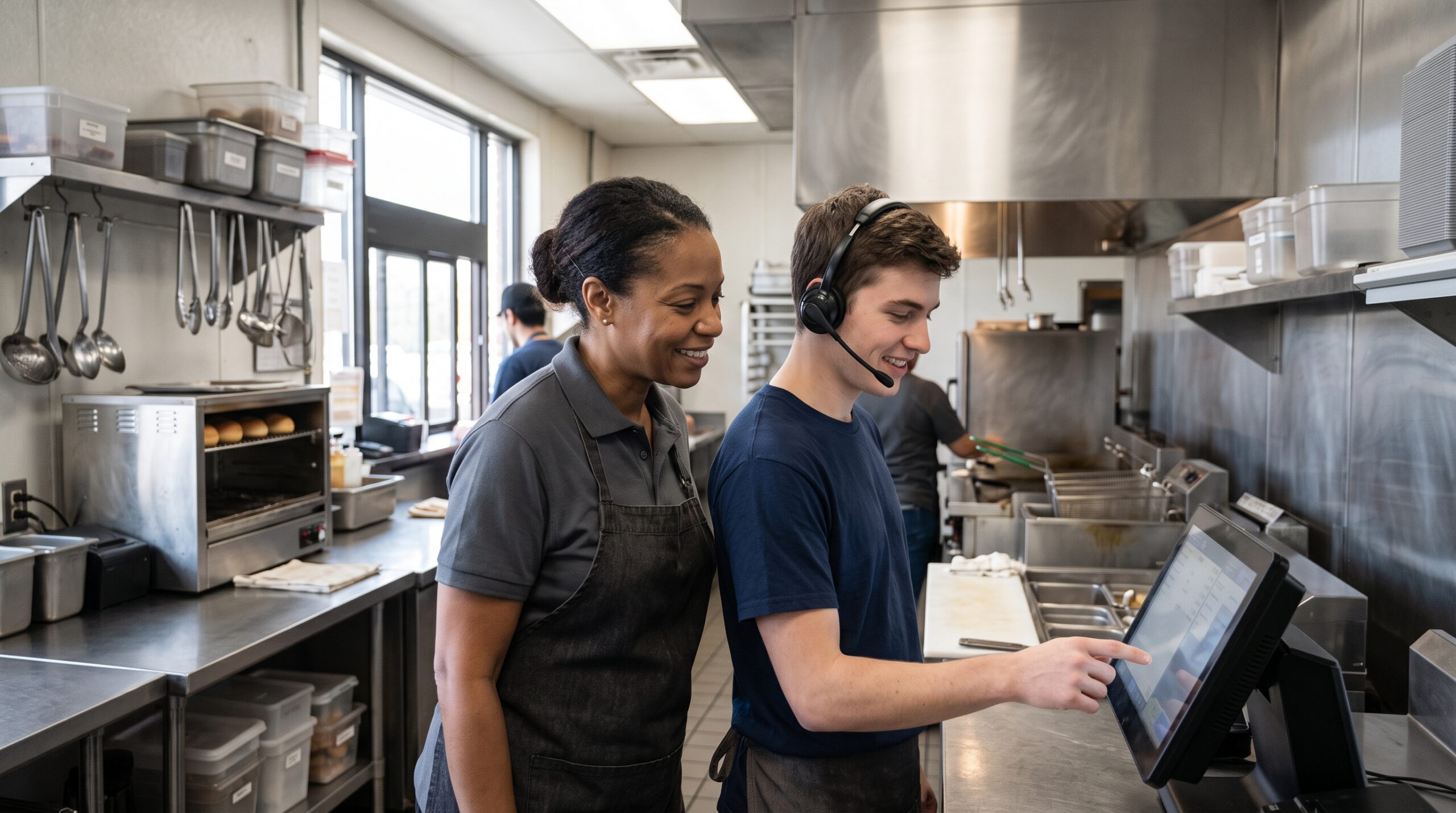
Scripts, voice, and upsells can be tuned centrally and pushed across the chain quickly, instead of retrained store by store, shift by shift. The brand voice a guest hears stops depending on what the conditions in the lane allow that hour. It is configured centrally and applies the same way at store 1 and store 900. Franchisees keep the flexibility that makes local operations work: adjusting menus, running local LTOs, tailoring regional offers to their market. Corporate keeps the brand standard and gets a far more consistent version of it in the lane, without micromanaging every store’s day-to-day decisions.
That balance has a name inside Hi Auto’s own positioning, and it applies just as well as a general operating principle: give franchisees room to run their local business while corporate holds the brand standard.
Bojangles is the clearest public example of what this looks like in practice. The chain named its AI order taker “BoLinda,” turning a voice-consistency tool into an on-brand character guests recognize. Jose Armario, CEO of Bojangles, described the control that gives the corporate team:
“You can set BoLinda to suggest to sell by day part, by promotion… She’s very consistent and very reliable.”
Jose Armario, CEO, Bojangles. QSR webinar, “AI Order Taker That Works: The Bojangles Model”, July 2025. Watch the clip
Note what that quote is actually evidencing: consistency and reliability, at the level a chain executive cares about, without exposing the mechanics behind any individual recommendation. That is the right level of detail for this conversation. Upsell logic, wherever it runs, works through algorithmic consideration of multiple factors like order context, time, and space. For a COO, the mechanism matters far less than the outcome: the same standard applies at every drive-thru, every day part, every store.
Voice as a marketing surface
Once voice is centrally controlled, it stops being a compliance problem and becomes something marketing can actually use. An on-brand voice, like BoLinda, can be coordinated with campaigns the way packaging and ad copy always have been. That is the same logic behind script optimization and cloned voice work: the voice a guest hears becomes another asset the brand designs on purpose, instead of an output nobody has the means to see or adjust.
It also reaches guests who currently do not get a consistent experience at all. English and Spanish ordering can auto-detect and switch mid-order, so a Spanish-speaking guest gets the same attentive, on-brand interaction as anyone else. That is brand consistency for a segment of guests whose experience currently rests on which languages a given schedule happens to cover, which is a staffing constraint rather than a brand decision. It makes multilingual ordering part of the brand promise itself.
What operations leaders should measure
If brand voice is now something you configure rather than something you train for, it needs metrics to match. Three are worth tracking at the operations level.
Consistency of greeting: is the same tone and script showing up across stores, or does it still move with the conditions of the daypart.
Consistency of upsell: is the offer happening on every order, or only when conditions in the store leave room for it. Hi Auto’s platform delivers a consistent upsell on 100% of orders, which makes this a direct measure of whether the standard is actually executing.
Execution variance between locations: is store 340 delivering the same experience as store 12, and can corporate see that gap without waiting for a mystery shopper report.
To be clear about the boundary here: these are measures of execution consistency, not measures of how a guest feels about the interaction. Whether and how a chain might one day measure guest sentiment is a separate, unresolved question. What is measurable today, and worth an operations leader’s attention now, is whether the standard corporate wrote is actually the standard guests are hearing, store by store, shift by shift.
Across roughly 1,000 stores running this kind of centralized order-taking today, completion holds at 93%+ and accuracy at 96%. Those two numbers matter together: a fast interaction that gets the order wrong is not consistency, and an accurate one that never finishes is not consistency either. Both have to hold, at every location, for a brand standard to mean anything operationally.
Close: from something you train for to something you configure
Every other brand touchpoint moved from something a team had to carry by hand to something a system carries by default. Packaging has a proofing step. Ad copy has a review cycle. Both were built so the standard holds without anyone having to remember it under pressure.
The drive-thru greeting is the last touchpoint still waiting for that system: write the standard, send it out, find out weeks later how it landed. Centralized voice control moves it onto the same footing as everything else the brand already governs. Franchisees keep the local flexibility their business depends on. Corporate gets much closer to the visibility and the consistency it already has everywhere else, at the one touchpoint where a guest actually talks to the brand.
Brand voice should not be the one touchpoint left without a system behind it. See how centralized voice control works across corporate and franchise locations on the Hi Auto product page, and read the full breakdown of what brand voice means at the drive-thru in the brand voice glossary entry.