TL;DR
- QSR stands for quick-service restaurant: a limited menu, fast counter or drive-thru service and consistent operations across many locations, often run by franchisees.
- Each of those traits becomes a requirement for every tool you buy: speed, consistency, thin labor, peak volume and a franchise structure.
- Restaurant Business, citing Technomic, reports that 47% of limited-service to-go occasions are sourced through the drive-thru, so the lane is a natural place to start.
- For drive-thru AI, check completion AND accuracy together across all live stores. Hi Auto reports 93%+ completion AND 96% accuracy across ~1,000 stores.
A QSR, or quick-service restaurant, is a restaurant built around a limited menu, fast counter or drive-thru service, and consistent operations across many locations. Many are run by franchisees.
If you are about to buy technology for one, that definition is more than background. It tells you the constraints every tool has to live with. This guide covers how a QSR operation works, where the drive-thru sits in it, and what to look at first when you evaluate technology.
What defines a QSR operation?
Whether it is a burger chain, a chicken concept, a coffee drive-thru or a sandwich shop, five traits show up again and again.
- Speed. Orders are measured in minutes, sometimes seconds. Any friction in taking or fulfilling an order is felt right away.
- A focused menu. A short menu supports fast prep, quicker training and predictable ticket times.
- Consistency across locations. A guest expects the same product at one location as at another. That takes standard systems, and a tool that works at one store has to work the same way at three hundred.
- High volume at the peaks. Breakfast, lunch and dinner rushes squeeze a lot of orders into a short window. A tool that slows down under load is a problem exactly when you need it.
- Thin labor and a franchise structure. Margins are tight and staffing is hard. Corporate sets the standard, and franchise owners, each running their own business, have real say in what gets deployed.
Treat these five traits as the specification sheet for any technology you evaluate. A tool that is hard to roll out, hard to explain or inconsistent between stores will struggle to win franchisee support, however well it performs in a pilot.
Why is the drive-thru at the centre of the buying decision?
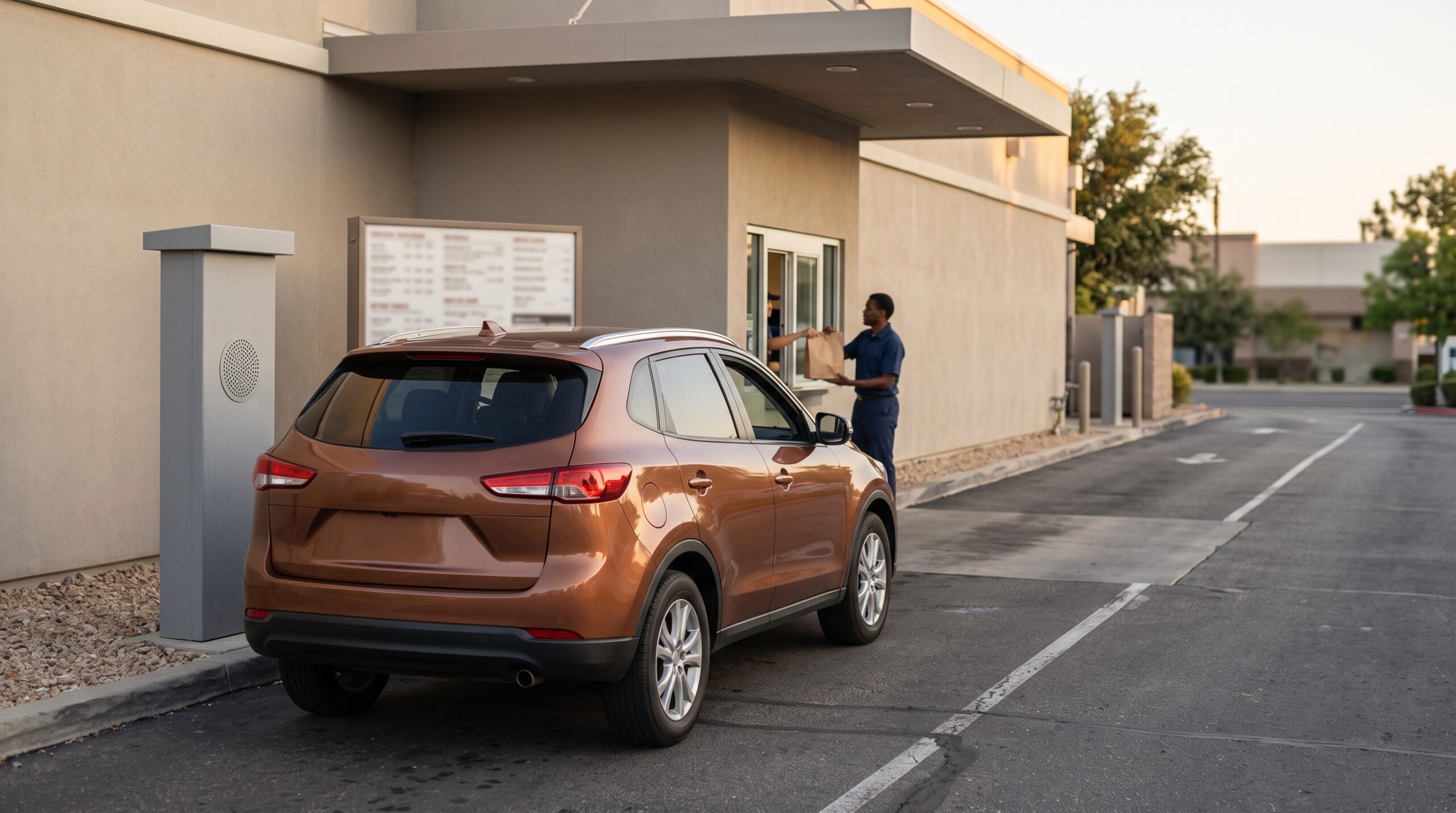
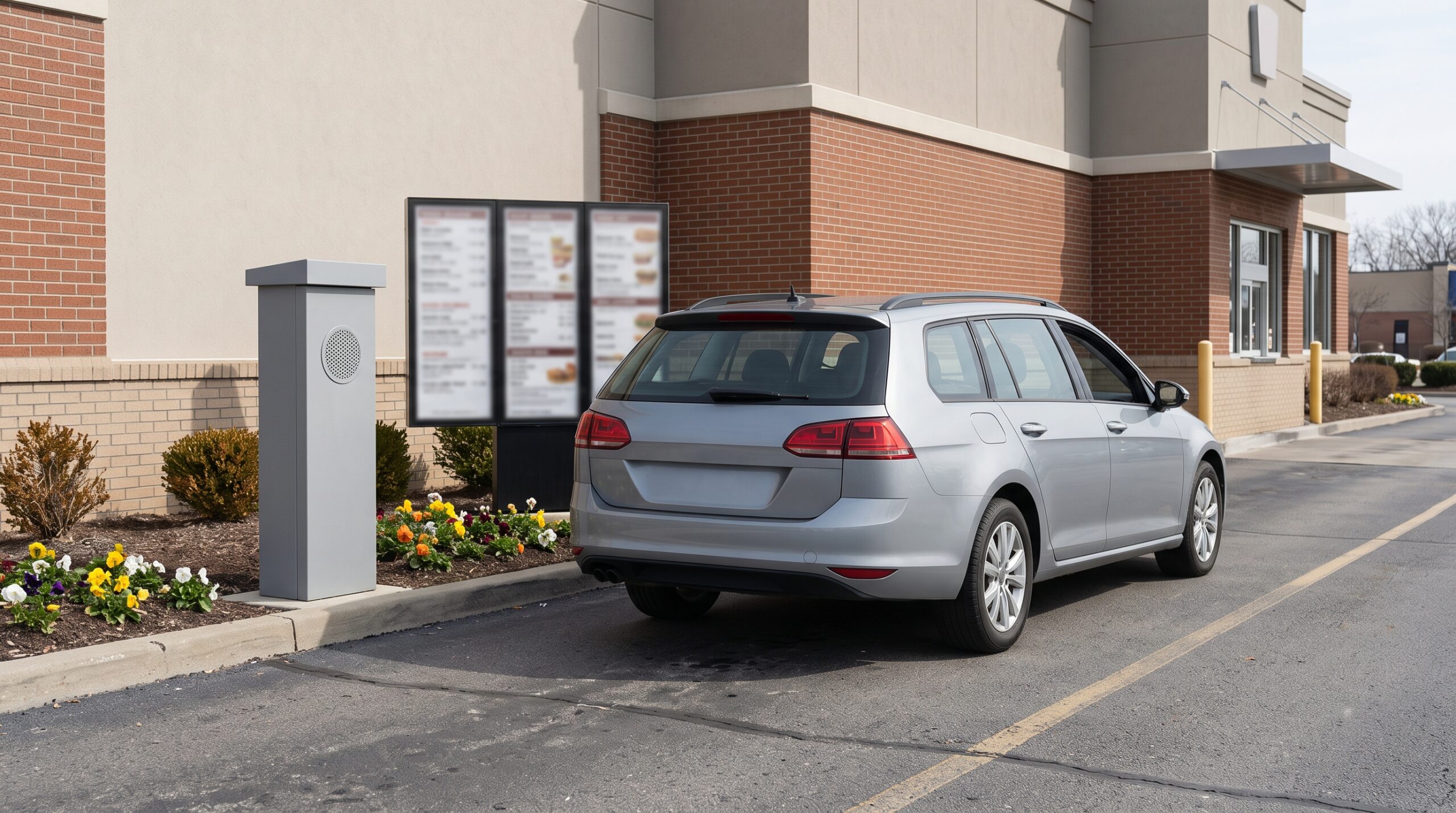
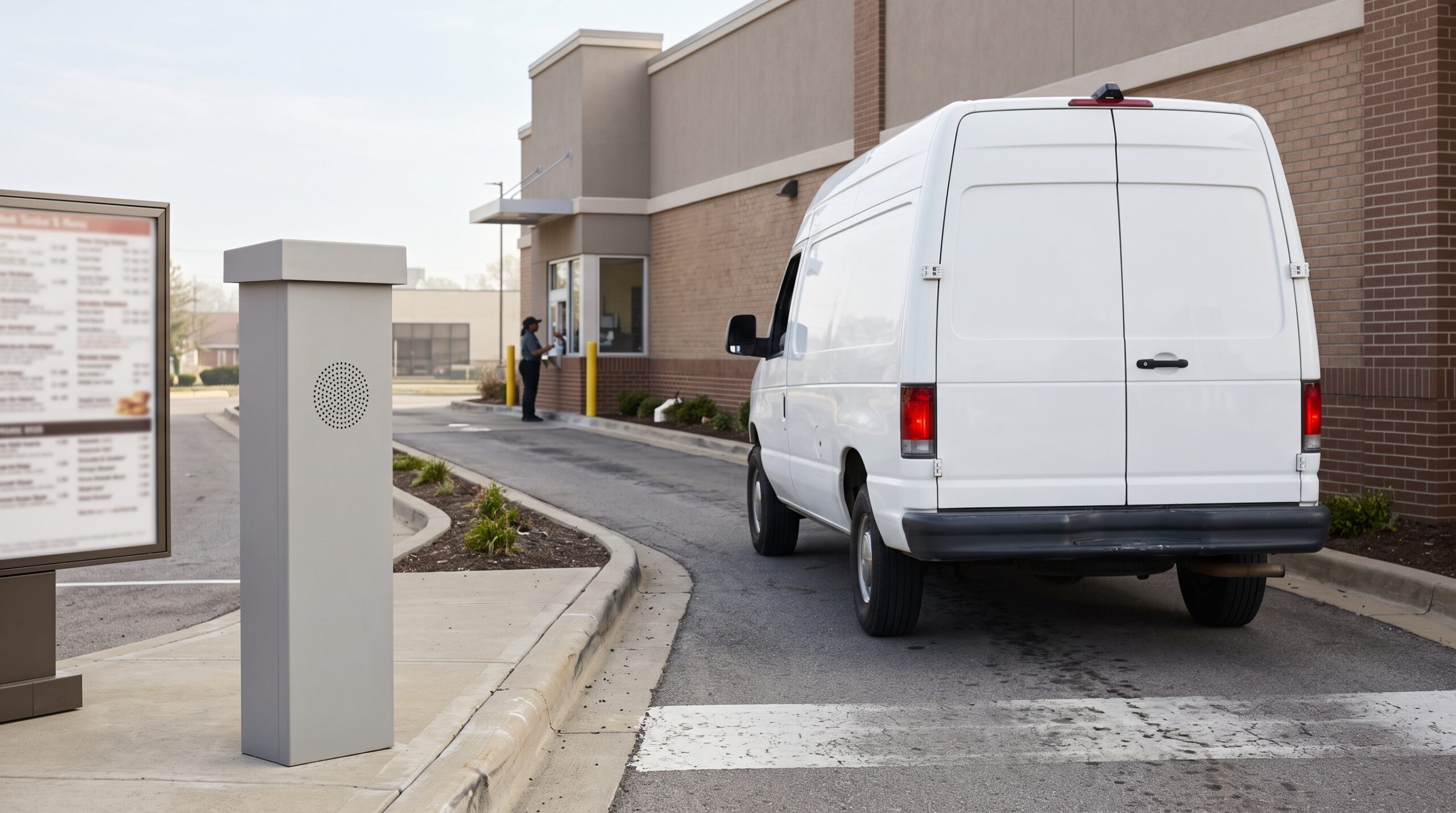
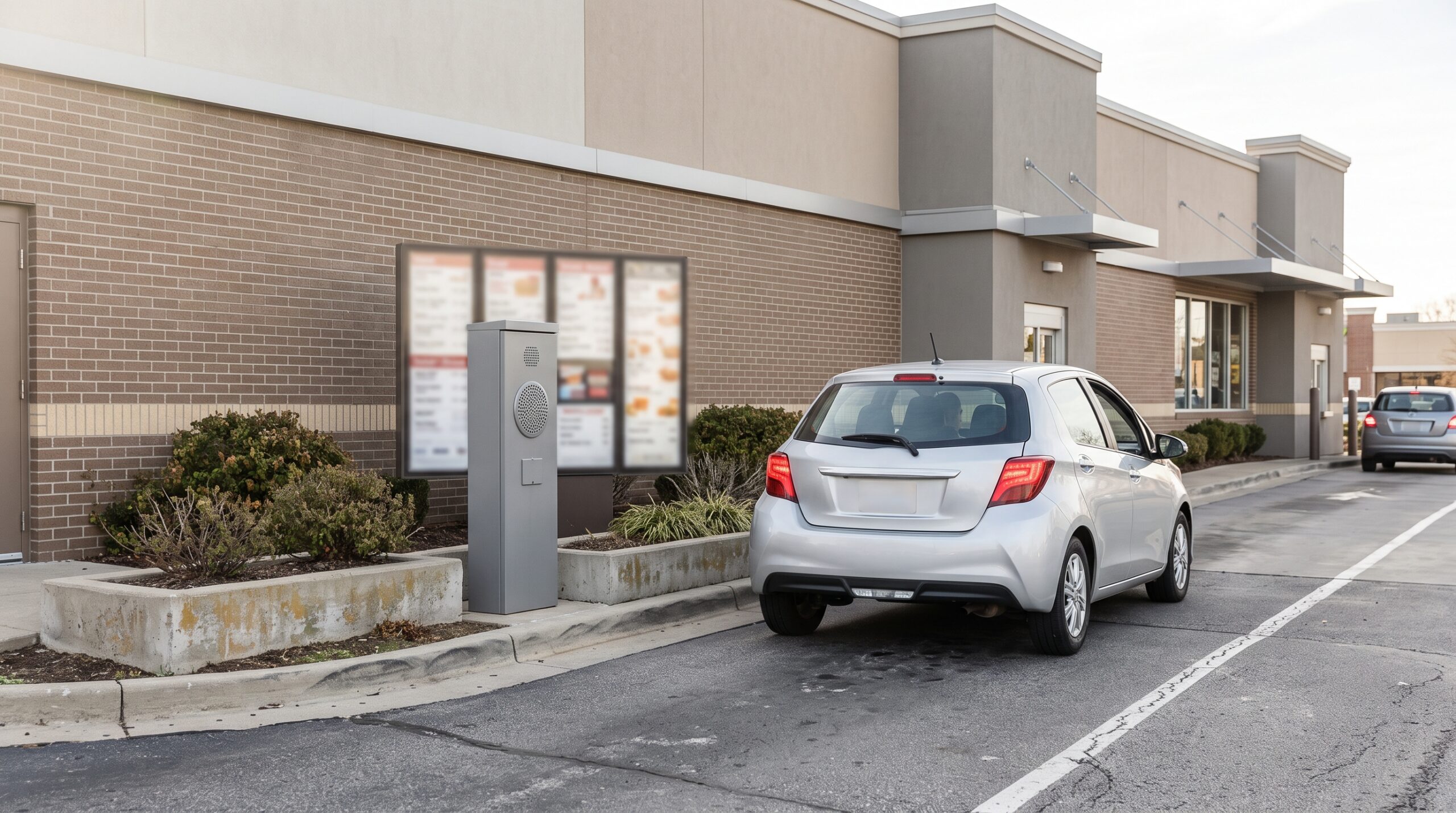
The drive-thru carries a large part of how guests reach a QSR. According to Restaurant Business, citing Technomic, at the average limited-service chain, 17% of occasions were ordered at the drive-thru, and 47% of limited-service to-go occasions are sourced through it.
Those figures cover limited-service chains, the segment QSR sits in. They show that the lane is a major route to the restaurant, so a problem there reaches a large share of guests. Slow order taking, wrong orders or system downtime all show up at the moment speed matters most.
The lane is also where the constraints meet. Speed, volume, thin labor and peak pressure all converge in one lane with very little slack. A slowdown at the speaker backs up every car behind it.
That is why we suggest first-time buyers start at the lane. Drive-thru automation is one of the places where a technology decision shows up quickly in results, good or bad.
What does the QSR technology stack look like?
A buyer will meet five core systems working side by side. Knowing what each does, and where it sits, helps you orient before you talk to vendors.
- Point of sale (POS). The hub. Every order flows through it to payment, the kitchen and reporting. For any other tool in the stack, the first question is how it connects to the POS. A vague answer is worth noting. The POS integration glossary page explains what to look for.
- Kitchen display system. A kitchen display system replaces paper tickets with a live screen for the kitchen crew. Ask how orders are routed to it and how changes to an order are shown.
- Digital menu boards. A digital menu board is the guest-facing display at the order point. It can change by daypart, remove sold-out items and show a limited-time offer. The question is how its content is managed and how it stays in step with the POS.
- Loyalty. Loyalty touches the POS for redemption and the menu board for offers, so map it early.
- Drive-thru order taking. Whether a person or an AI takes the order at the speaker, that step has to connect cleanly to the POS, and through it to the rest of the operation.
These systems do not work alone. The quality of the connections between them often decides whether the operation feels smooth or patched together.
Which are the two toughest jobs at the lane?
Ask an operator which stations wear people down first, and you will hear the same two answers. Jason Amell, Director of Operations at JASAM Enterprises, a Checkers & Rally’s franchisee, described them in a Hi Auto customer video.
“The two toughest stations in the restaurant are fries and order taking. It was tough to find an order taker that consistently upsold and was kind to the guests. That’s why I like Hi Auto.”Jason Amell, Director of Operations, JASAM Enterprises.
Hi Auto customer video Real Stories from the Drive-Thru Frontline, 2025.Order taking is hard because of how the job is built. One person is asked to wear a headset, hold a conversation, handle food, take payment and serve the guest at the window, often within the same few minutes. That load comes from job design and has nothing to do with effort or attention.
It also feeds employee turnover, which is one reason operators look closely at anything that changes how the order-taking station works.
What should you look for when evaluating drive-thru AI?
Taking an order in a demo is the easy part. What matters is whether an AI order taker holds up across a real chain, shift after shift. Five checks help.
- Completion AND accuracy at scale, together. Read the two numbers side by side, averaged across all live stores rather than taken from the best location. Hi Auto reports 93%+ completion AND 96% accuracy across ~1,000 stores. Hi Auto’s Buyer’s Guide (2025) sets a 90% completion threshold as a starting point, and advises you to ask every vendor how its numbers are measured.
- How edge cases are handled. A clean order is easy. Look at what happens when a guest changes their mind mid-sentence, the lane is noisy or a limited-time offer launched this morning. Ask each vendor how it handles the orders it is unsure about, and how open it is about that.
- Customization for real drive-thru operations. A drive-thru runs dayparts, limited-time offers, dual lanes and, in many markets, Spanish-language orders. Ask how menu changes reach hundreds of stores without a manual workaround.
- POS integration depth. Ask whether orders are written into the POS in real time or in batches. The answer tells you a lot about how the system was built.
- A track record beyond the pilot. A two-store pilot proves little. You want evidence of steady results across many locations over time, which is the idea behind reliability at scale. Franchisee retention is one of the more honest signals.
“99% of the franchises that have tried it, have stuck with it.” Jose Armario, CEO, Bojangles. QSR webinar AI Order Taker That Works: The Bojangles Model, July 2025. Watch the clip
Where should a first-time buyer start?
Here is a short starting list.
- Map your stack. Know which POS, kitchen display and menu board systems you run before you evaluate anything new. Compatibility decides what is possible.
- List the constraints of your lane. Menu size, peak hours, dual-lane set-up, guest languages and how often you run limited-time offers. These are requirements.
- Ask for the average across all live stores. Ask for completion and accuracy across every store the vendor runs. That number tells you what to expect at store 50 or store 500.
- Plan the timeline. Hi Auto’s deployment runs 90-120 days from pilot to scale, with the pilot live in ~8 weeks. Build that into your plan from the start.
To see how one purpose-built system approaches these steps, visit the Hi Auto product page.
In QSR, technology decisions are made at the lane
Every trait that defines a QSR, speed, thin labor, franchise structure and peak volume, meets at the lane. That is where a technology decision shows up in the results, and where the right choice has the most direct effect on the business.
Judge any drive-thru technology by how it performs across every store, every shift and every menu change, and give the demo less weight.
Call to action
Read Hi Auto’s Buyer’s Guide for AI in the Drive-Thru for an evaluation matrix and a checklist of questions to put to every vendor.
Open items for Hi Auto
- We are confirming the publication year of the Restaurant Business page that cites Technomic. If it cannot be dated, we will replace it with a dated source before publishing.
- Please confirm which reader the Broad Category and Awareness cluster should speak to. This guide is written for a technology buyer who could be an IT leader or an operations leader.