TL;DR
- Accent recognition is a speech system’s ability to understand the way real people talk. In a lane, the system has to adapt to the guest.
- A system tested in one place may not carry over to another. The only test that counts uses the voices in your own markets.
- Hi Auto supports English and Spanish with automatic detection and mid-order switching, and is live in the US, Australia, New Zealand and the UK.
- Across 100M+ orders processed per year, Hi Auto reports 93%+ completion and 96% accuracy as platform-wide averages, so test on your own voices.
A guest in Houston orders a number three combo with a large sweet tea. A guest in Glasgow orders the same combo. So does a guest in Auckland. The words on the ticket are identical.
At the speaker, each order arrives differently. The rhythm changes, the vowels change, and so does the way the menu item gets named. None of these guests is unusual. Speech varies, and that is normal.
That is why accent recognition matters for any chain that serves more than one market. A voice AI has to understand the guest who pulls up, whoever they are. This guide is for the team that has to check it does: what to test, how to test it, and what to ask a vendor.
Why do accents matter at the speaker?
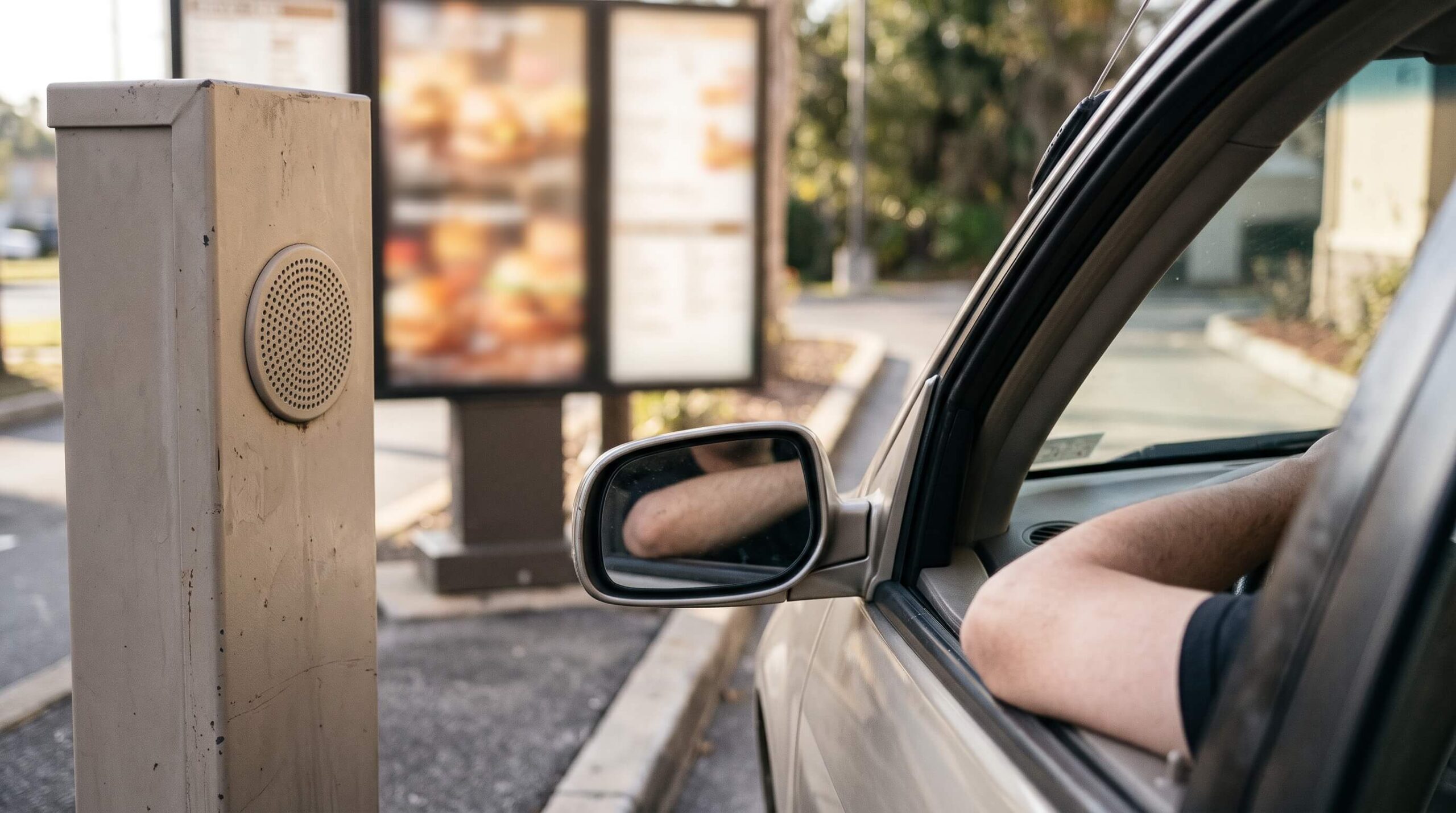
The drive-thru speaker is not a quiet room with a good microphone. Several things affect what the system hears, and speech variation is only one of them.
Same words, different sounds. Two guests can order the same burger in the same words. The sound reaching the microphone still differs in rhythm and stress. Speech recognition has to connect all of those variations to the right item.
Regional vocabulary. Guests do not always use the printed menu name. Some use a local shorthand or an informal name for an item. This is a dialects and variants question as much as an accent question.
The lane makes every voice harder to hear. Engine noise, wind, distance from the speaker and a closed car window all affect the audio before the system begins to listen. Noise handling is a big part of how a system copes.
Repeating costs the guest. A guest who has to say an order twice has a worse visit, and the lane slows down.
Independent data shows how much that matters. In Intouch Insight’s 2026 Drive-Thru Study, mystery shoppers at locations of three national QSR brands running voice AI had to repeat part of their order on 29.1% of visits, against 20.4% for the same brands in the main study. The study does not say why guests repeated themselves. This guide does not put the figure down to accents or to any other single cause. These are industry findings, not Hi Auto figures.
It does point to two measures worth watching closely: first-time recognition rate and user correction rate. Ask any vendor to report both, not only overall completion.
What does accent recognition mean in plain words?
It is speech recognition that has been built and tested to understand how real people talk, including regional and personal variation. The glossary has the full definition. What matters for your evaluation is the question behind it: does the system perform well on the voices your guests actually have?
Hi Auto uses proprietary in-house speech recognition and audio filtering, as described on the product page.
Across 100M+ orders processed per year, Hi Auto reports 93%+ completion and 96% accuracy. Those are platform-wide averages. They tell you about the whole system, not about any one accent or region, which is why the test method below matters.
How does language switching work in a lane?
Accent recognition is about understanding one language spoken in different ways. Multilingual ordering is about handling more than one language. Both matter, and the interesting moment sits where they meet.
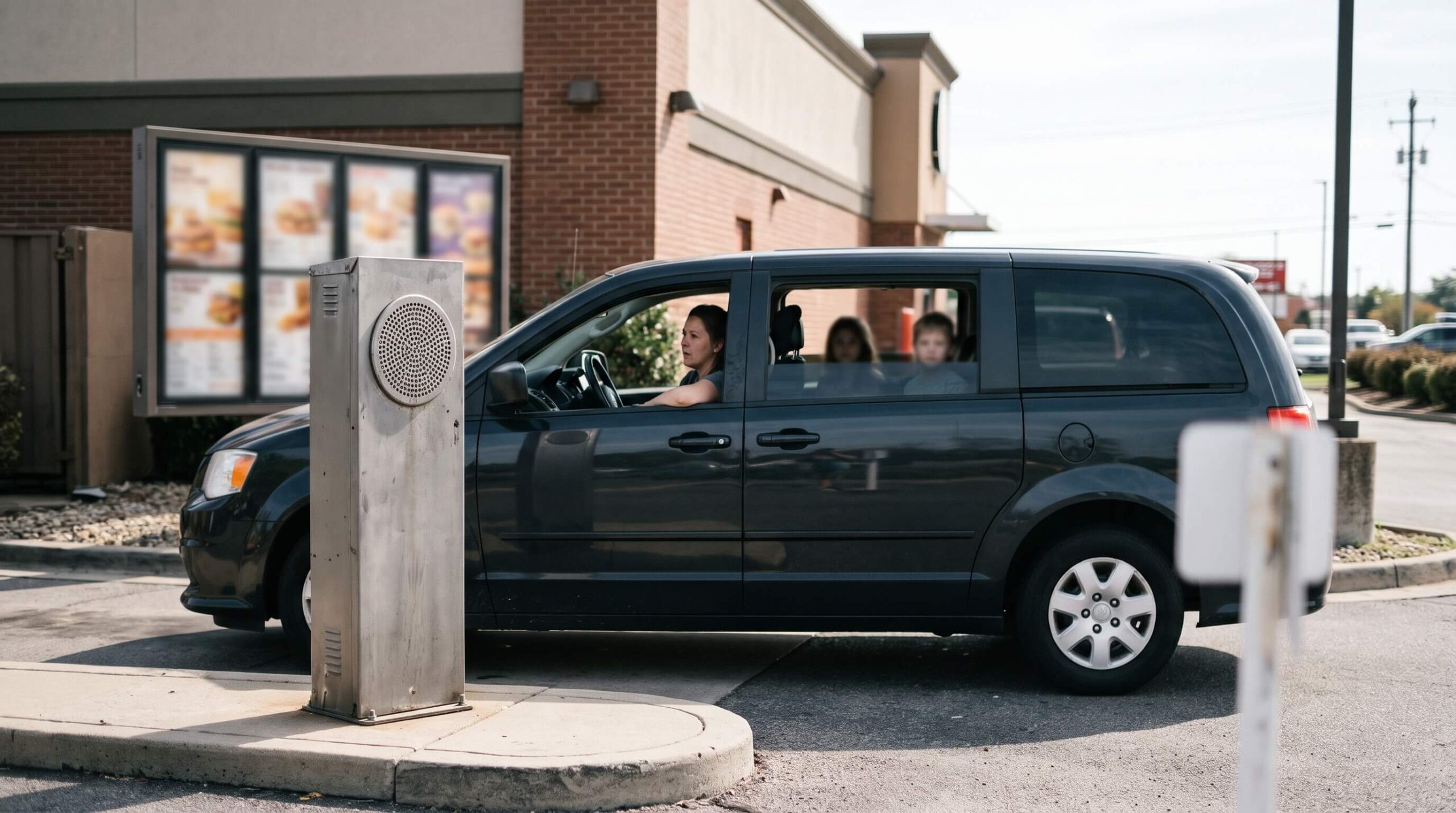
Picture a family at the speaker. The driver starts in English. A passenger leans over and asks for one item in Spanish. The system has to follow the change without the family doing anything different.
Hi Auto supports English and Spanish, with automatic language detection and switching mid-order. Hi Auto is live in the US, Australia, New Zealand and the UK.
For your own test, do not stop at a clean Spanish order. Try a switch partway through, and check that the items captured before the switch are still in the order.
How do you test with a panel of your own voices?
Platform-wide averages are a starting point. The test that tells you what will happen in your markets uses voices from your markets. Here is a method your team can run.
- Gather real voices from your own markets. Recruit testers from the regions and communities your stores serve, not from one office. Ask them to order the way they normally would.
- Test at the speaker, not in a quiet room. Use the real outdoor speaker and microphone. A studio recording is not a stand-in for a lane.
- Include engine noise and real conditions. Run tests with a car idling at the speaker. If a store sits near a highway, recreate that.
- Include a bilingual order and a mid-order language switch. If your markets include Spanish-speaking guests, test a full Spanish order, a mixed order and a switch partway through.
- Read results by region, not only overall. An overall average can hide differences between markets. Ask the vendor to report first-time recognition rate and user correction rate by location or region.
- Agree in writing how results are measured. Settle the definitions before the test starts: what counts as a completed order, what counts as an accurate one, and how repeats are logged. Hi Auto’s Buyer’s Guide advises buyers to check with vendors how accuracy is measured.
Hi Auto’s pilot is typically live in about 8 weeks, and the path from pilot to scale runs 90-120 days. A structured voice panel fits inside the pilot rather than adding time before it.
What should you ask a vendor?
Four questions separate a vendor who has thought about diverse markets from one with a single headline number and a polished demo.
- How was your speech recognition built and tested for the markets we serve? A good answer covers drive-thru audio and testing at a real speaker. A red flag is a general claim of “accent support” with no detail.
- Can you report performance by region or location? A single overall figure cannot show you variation across markets.
- Can you show a mid-order language switch? Ask for a live test that mixes English and Spanish, and check that the items captured before the switch stay in the order.
- How do improvements reach every store? A good answer describes updates across the whole chain, not store by store.
Ask each vendor for completion and accuracy together, stated as averages across all live stores, and ask how they are measured. For reference, across 100M+ orders processed per year, Hi Auto reports 93%+ completion and 96% accuracy together.
Test on the voices you actually serve
Most evaluations start with a vendor demo and work back to the real world. For voice AI in diverse markets, flip the order. Start with the voices your guests have, then hold every vendor to that standard.
No system will be perfect for every speaker in every condition. At Hi Auto, the AI handles the order. When it cannot confidently determine what the guest wants, a trained Hi Auto supervisor resolves it instantly through the platform, and every one of those moments is used to train the model further. The process is seamless to the guest and the restaurant. The goal is consistent performance across the markets you serve, clear reporting by region, and clear definitions of how results are measured. A good partner will welcome a structured test.
Next step: set up a voice panel for your pilot
Hi Auto’s Buyer’s Guide includes an evaluation matrix your team can use to compare vendors. Read the Buyer’s Guide, then talk to the Hi Auto team about how to set up a voice panel for your pilot.