TL;DR
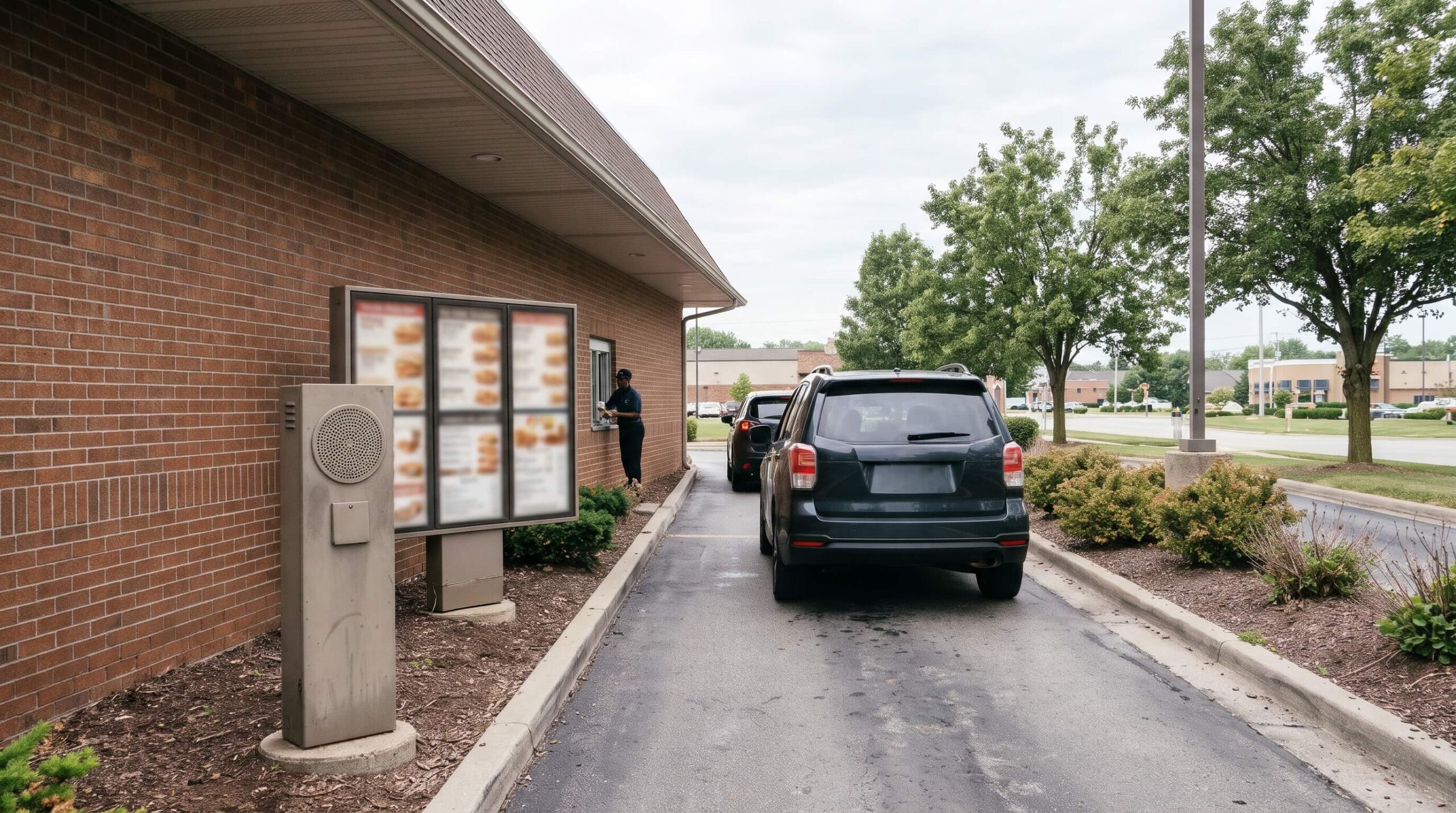
- At the drive-thru, an ordering system takes the guest’s order at the speaker, shows it on a confirmation board and sends it to the POS. With Hi Auto, it is AI-powered ordering with human backup when needed.
- Every ordering system meets orders it cannot confidently resolve. With Hi Auto, a trained supervisor resolves those moments, and the process is seamless to the guest and the restaurant.
- Five checks help in a vendor call: completion and accuracy together, lane conditions, customization, POS depth, and a track record beyond the pilot.
- Hi Auto processes 100M+ orders per year and reports 93%+ completion and 96% accuracy as an average across more than 1,000 live stores.
It is 12:40 and a car pulls up to the speaker. The crew member on the headset is also watching the fryer, the window and the cash drawer. Nothing is wrong. That is simply how the job is built.
Buyers hear about three kinds of ordering system. A lobby kiosk is a touchscreen where guests place their own order. A mobile app lets guests order ahead. A drive-thru voice system takes the order at the speaker, while the guest stays in the car. Each solves a different problem, and this guide is about the third.
At the speaker, an AI order taker is AI-powered software that takes the order in conversation and sends it to the POS. It is one part of drive-thru automation, and with Hi Auto it comes with human backup when needed.
What is an automated ordering system for the drive-thru?
The name covers a lot of ground, so here is the plain version. In the drive-thru, an ordering system of this kind does four things. It greets the guest, listens, confirms what it heard, and sends the order to the POS.
Behind the AI sits human backup. Every ordering system meets moments it cannot confidently resolve, and we explain how Hi Auto handles them below.
How an order moves from the speaker to the kitchen
Here is the path of one order, in plain language.
- Greeting. The guest is greeted, typically within 3-5 seconds.
- Listening. The system follows what the guest says, including a change of mind in the middle of a sentence.
- Confirming. Items appear on the confirmation board as the guest speaks. The guest can see the order build and correct it on the spot.
- Sending. The order goes into the POS with itemization, modifiers and pricing. New menu items are set up by the Hi Auto team.
- Kitchen. The order reaches the kitchen through your POS, and the crew starts preparing it.
This whole path is what end-to-end ordering means in practice. The link between the conversation and the register is POS integration.
Hi Auto’s average response time is 1.52 seconds, which keeps the exchange moving so the guest is not left waiting on the technology.
What a real lane does to a conversation
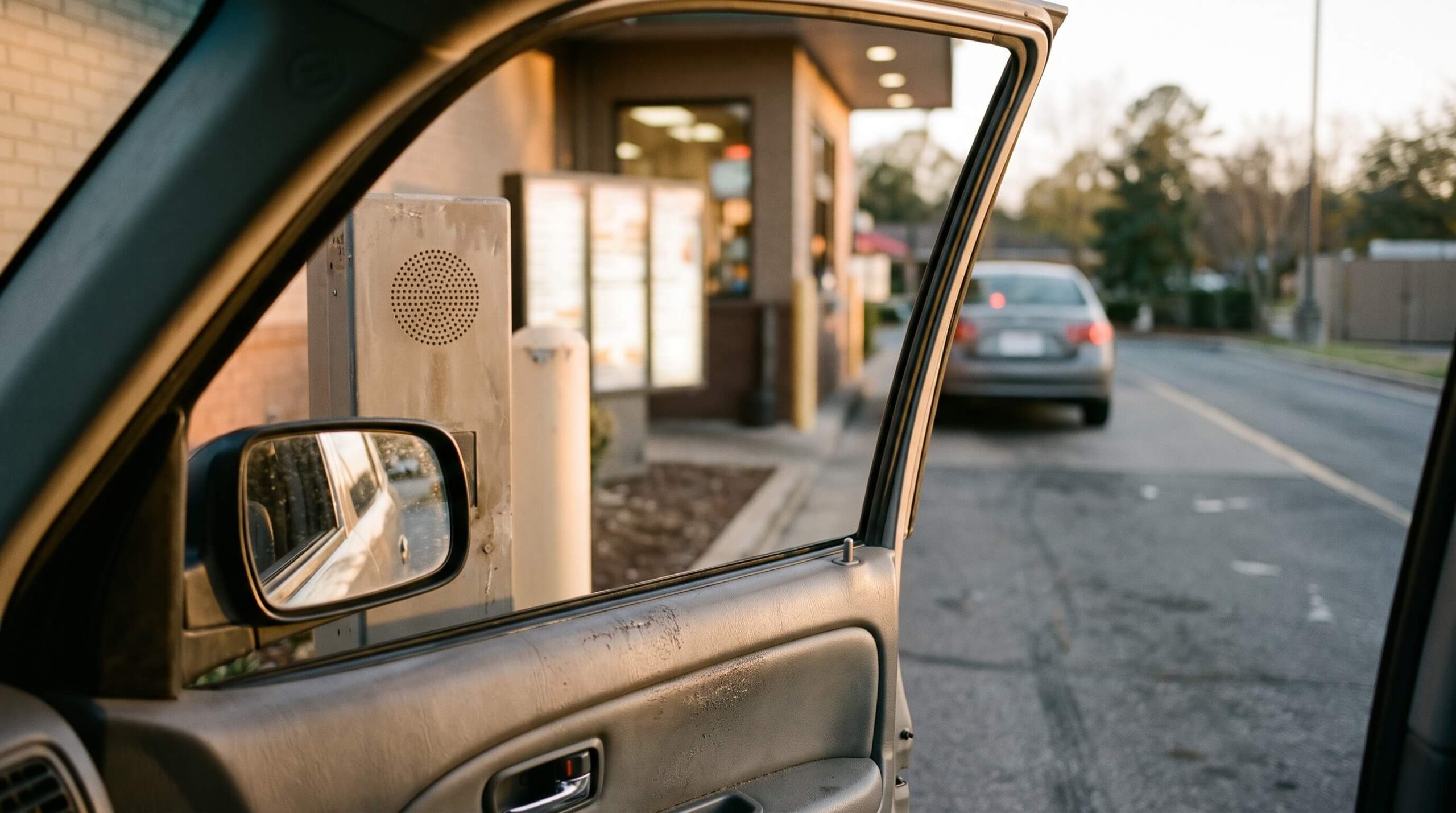
A drive-thru lane is a hard place for a voice system. Engines idle, wind gusts across the speaker, and rain falls on a metal roof. A child in the back seat asks for something different, and a radio plays in the next car.
Add the ordering itself. A guest changes a combo after confirming a drink. Another orders for five people in one breath. Another switches from English to Spanish halfway through. None of this is unusual, and all of it lands on the system at once.
Noise handling is a large part of the answer. Hi Auto uses in-house audio filtering and speech recognition that works in the drive-thru environment. The highest-performing large language models handle the conversation itself, and English and Spanish are auto-detected, with switching mid-order.
What happens when the system is not sure
Every ordering system meets orders it cannot confidently resolve. Here is what independent research found, and how Hi Auto handles those moments.
Independent research shows how real these moments are. In Intouch Insight’s 2026 Drive-Thru Study, mystery shoppers visited locations of three national QSR brands running voice AI in June and July 2026. The AI took some or all of the order on most of those visits. QSR Magazine’s 2026 Drive-Thru Report (Danny Klein, 1 October 2026) reports that, among the 15 drive-thrus shopped where voice AI could not continue the order, it could not understand a customization request in 53.3% of cases and could not answer a question in 40%. These are findings about AI locations in general, not Hi Auto figures.
With Hi Auto, the AI handles the order. When it cannot confidently determine what the guest wants, a trained Hi Auto supervisor resolves it instantly through the platform, and every one of those moments is used to train the model further. The process is seamless to the guest and the restaurant. The glossary entry on a fallback system explains the general idea.
A demo rarely includes these moments, so a pilot in real lanes is where they show up.
Five checks to take into a vendor call
Every demo looks good. These five checks help you compare vendors on the same footing.
- Completion and accuracy, together, at scale. A completion rate alone shows how often the system finished an order, and order accuracy alone can hide how often it needed help. Ask for both, as an average across all live stores and not a best-location number. Hi Auto’s Buyer’s Guide advises asking every vendor how each figure is measured.
- How the system copes with a real lane. Ask how it handles lane noise, a change of mind mid-order and a switch to Spanish.
- Customization for real operations. Ask about menu changes, limited-time offers, dayparts, dual lanes and Spanish. These are daily requirements for a multi-unit chain.
- POS integration depth. Ask which POS systems are supported today and how deep the connection goes. Hi Auto is live in stores with Genius by Global Payments (formerly Xenial), NCR Aloha, Lucas, PAR Brink, Oracle MICROS Simphony and Focus. The partners page lists each one. Ask how new menu items get set up.
- A track record beyond the pilot. Ask how many stores are live, for how long, and what franchisee adoption looks like after the trial ends.
On the fifth check, Jose Armario, CEO of Bojangles, described what adoption looked like:
“99% of the franchisees that have tried it have stuck with it.”
Jose Armario, CEO, Bojangles. QSR webinar AI Order Taker That Works: The Bojangles Model, July 2025. Watch the QSR webinar: Armario on franchise adoption
Hi Auto’s numbers are 93%+ completion and 96% accuracy, as an average across more than 1,000 live stores. Use that pairing as a reference point for every proposal on your desk.
What good looks like on the ground
A demo is a controlled setting. The better test is what operators say once the system is running in their stores.
Linda Ronda, Store GM at Checkers, described what changed for her crew:
“Before we used to have to stress on trying to run to the front and answer the speaker for the guests and ring up orders and stuff but now we can do other things and be able to say and still pay 100% attention to the guests at the window.”
Linda Ronda, Store GM, Checkers. Hi Auto customer video, 2025. Watch Linda Ronda on crew attention
The drive-thru job puts several tasks on one person at once, so relief at the speaker frees attention for the guest at the window. Jose Armario described the guest side of it:
“The beauty of this technology is that we haven’t missed a beat when it comes down to the ability for this technology to interact as friendly, as effective, as efficient as a human person.”
Jose Armario, CEO, Bojangles. QSR webinar AI Order Taker That Works: The Bojangles Model, July 2025. Watch the QSR webinar: Armario on the guest experience
Independent research adds balanced context. In the same 2026 study, order accuracy at the AI locations was 90.8%, against 86.7% for the same three brands in the main study. Guests at the AI locations also had to repeat part of their order more often: on 29.1% of visits, against 20.4%. The study notes that the AI locations were chosen rather than randomly assigned, so these comparisons describe what shoppers found rather than prove cause. They are findings about AI locations in general, measured differently from Hi Auto’s figures, so the two should not be compared. They are a good reason to ask any vendor how well the system is understood the first time.
What it takes to get started
Plan this as an operations project. Three things need to be in place: a POS system, a drive-thru audio system and reliable internet.
With Hi Auto, a pilot goes live in about 8 weeks, and the path from pilot to scale takes 90 to 120 days. That runs through four steps: System Buildup, Performance Optimization, Business Optimization and Rollout at Scale.
Judge it on the busiest hour, not the demo
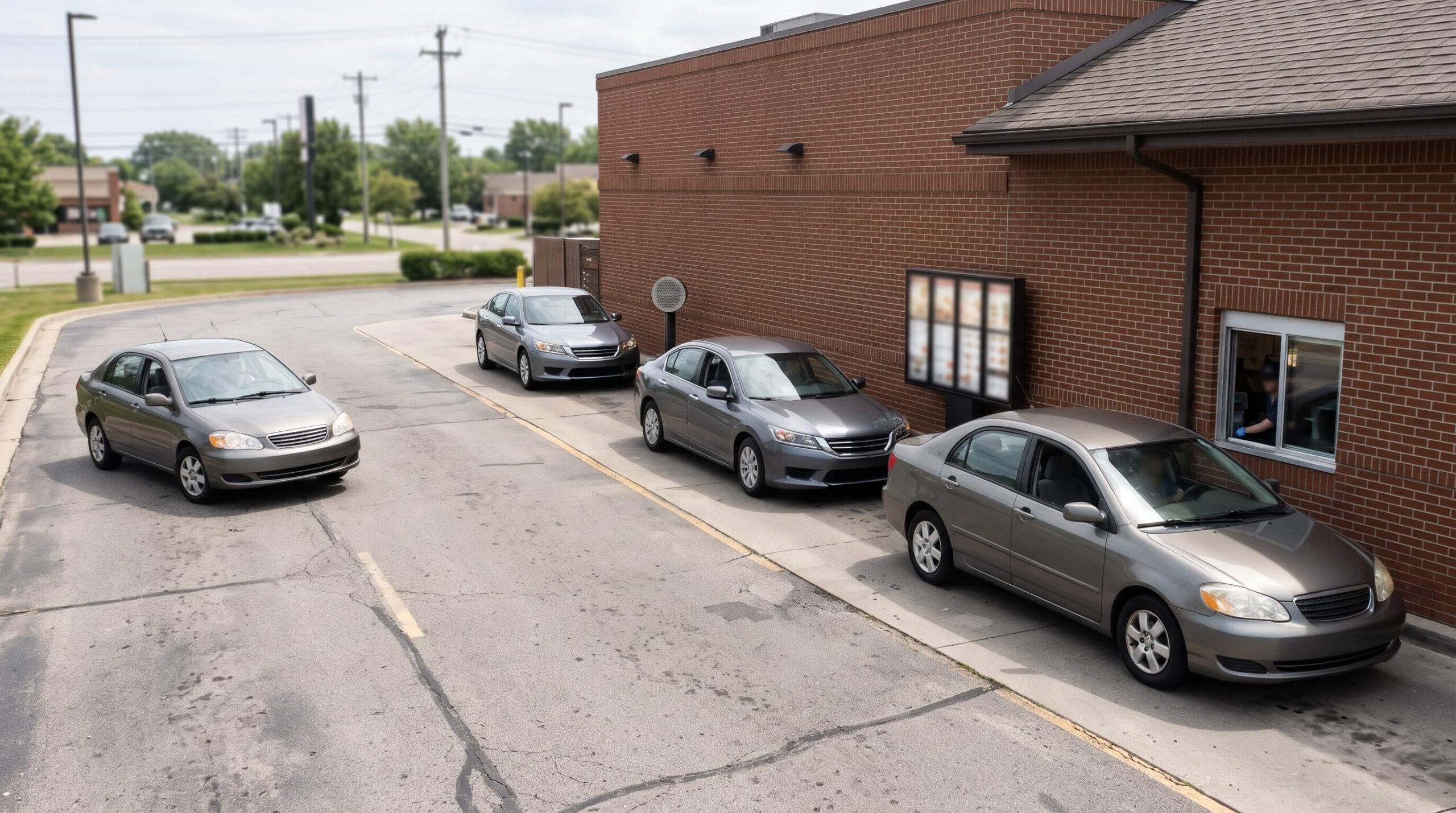
A demo has one voice, one order, no wind and no queue. The real test is a Friday lunch rush in the rain, with a second lane open, a guest who changes their order twice, and a line that does not stop.
So take that hour into your vendor calls. Ask for completion and accuracy together, as an average across all live stores. Ask how it copes with noise, changes of mind and Spanish. Ask for a track record that goes well past the pilot.
Compare vendors with the Buyer’s Guide
Read the evaluation matrix in Hi Auto’s Buyer’s Guide, AI for the Drive-Thru and bring it to your next vendor call. Then talk to the Hi Auto team about what 93%+ completion and 96% accuracy look like across more than 1,000 live stores, and see the Hi Auto product page for the full capability set.