TL;DR
- A resilient drive-thru AI is designed for the hard order: a noisy lane, a mid-sentence change, an item that just ran out.
- Hybrid AI architecture combines AI that handles the order with a trained human backup for the moments the AI is not confident. It is seamless to the guest and the restaurant.
- Ask one question of every layer, from the speaker to the POS to the cloud: what happens when this part is under stress?
- Hi Auto processes 100M+ orders per year, with 93%+ completion and 96% accuracy, always together. Test any system on its hardest orders, not its average ones.
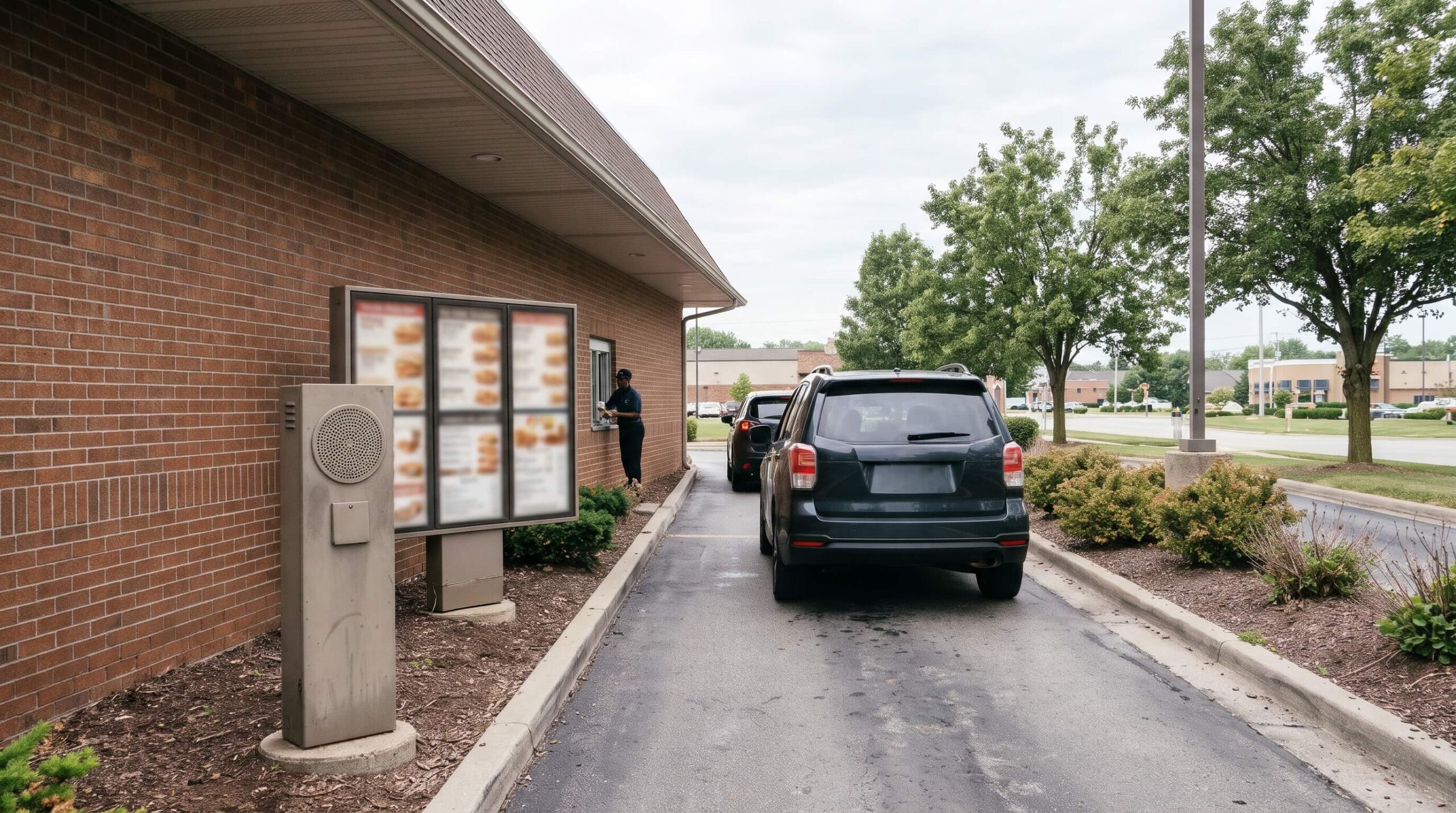
A pickup truck idles at the speaker. The guest starts an order, changes it mid-sentence, then changes it again. A child calls out from the back seat. Wind crosses the microphone. One item has just run out.
That is a normal lunch rush. A hybrid AI architecture is built for it. It combines AI that handles the order with a trained human backup, so an order the AI cannot confidently resolve still gets finished correctly, and the guest and the restaurant see a seamless experience.
This guide looks at what a resilient drive-thru system gives an operator. It walks through the parts of the system in plain terms, asks what happens to each one under stress, and shows how the human backup keeps orders finished correctly. Vendor criteria in general are covered in “Voice AI for Drive-Thru: A Technical Evaluation Guide for QSR IT Teams.”
What are the layers of a drive-thru AI system?
A drive-thru AI system is a chain of parts, and the order is only as good as the weakest one. Here are the layers, and the stress question for each.
- Audio capture and filtering. Before any AI can help, the microphone has to hear the guest through an open window, alongside engines, wind and a radio. Hi Auto uses in-house audio filtering. See noise handling in the glossary. Stress question: does the system still hear a clean signal from a tall truck cab in bad weather?
- Speech recognition. This layer turns the guest’s voice into words. Hi Auto uses proprietary in-house speech recognition. Stress question: was it tested at a real speaker, or in a quiet room?
- The conversation. This layer works out what the guest means across several turns. Hi Auto’s product page says the highest-performing large language models handle the conversation. Stress question: when a guest changes an item, asks about an ingredient and adds a combo in one breath, does the order stay right?
- The trained human backup. This layer resolves what the AI cannot confidently determine. More on this below.
- POS injection. Orders inject into the POS with itemization, modifiers and pricing, and menu and price changes are set up by the Hi Auto team. See POS integration. Stress question: when a price changes mid-morning, how does the change reach the lane and how soon?
- Cloud infrastructure. This is the layer underneath all the others. Stress question: what happens at the lane when any part of the stack slows down?
Where does the AI need help?
Every drive-thru AI meets orders it cannot confidently resolve. Plan for that from the start.
Independent context helps here. The 2026 drive-thru report in QSR Magazine (1 October 2026, data partner Intouch Insight) looked at 15 drive-thrus shopped where the AI began the order and passed it to a person mid-interaction. The stated reasons were that the AI could not understand the customization request (53.3%) or could not answer a question (40%). That is a finding about AI drive-thrus in the study, not a Hi Auto figure.
Three kinds of moment come up at the speaker:
- A question the AI cannot answer, such as whether a sauce contains dairy.
- A customization it cannot parse, such as an unusual combination or an order changed three times in one turn.
- An item that has run out, where the AI can offer an alternative, depending on the rules and script set up with each brand.
Your system will meet these moments. What matters is what happens next, and whether the fallback system handles it while the guest is still at the speaker.
What happens when the AI is not sure?
Hi Auto’s AI handles the order. When it cannot confidently determine what the guest wants, a trained Hi Auto supervisor resolves it instantly through the Hi Auto platform, and every one of those moments is used to train the model further. The process is seamless to the guest and the restaurant.
For an operator, the point is simple: an order the AI is unsure about still gets finished correctly, so completion and accuracy hold together even on the hard orders.
Hi Auto’s product page describes a human-in-the-loop backup that steps in when the AI is not confident.
What does resilience look like beyond the AI?
A strong AI and a good human backup still depend on the infrastructure under them.
Cloud. Hi Auto runs cloud-based AI on Microsoft Azure.
The store. A store needs a POS system, a drive-thru audio system and reliable internet.
Infrastructure rarely shows up in a demo. It shows up at 7:45 on a busy morning. That is the case for judging reliability at scale and not a single good week.
How do you prove resilience at scale?
A strong pilot is a good start. What matters is whether the numbers hold across many stores through rushes, promotions and language switches.
Hi Auto processes 100M+ orders per year across more than 1,000 stores, with 93%+ completion and 96% accuracy, always together. Completion is the share of orders sent to the POS without staff intervention. Accuracy is the share sent with every item and customization exactly right. Bojangles’ CEO described what that looks like from the operator’s side:
“The beauty of this technology is that we haven’t missed a beat when it comes down to the ability for this technology to interact as friendly, as efficiently as a human person.”
Jose Armario, CEO, Bojangles. QSR webinar “AI Order Taker That Works: The Bojangles Model”, July 2025. Watch Jose Armario in the QSR webinar on Hi Auto’s videos page
On franchisees staying with Hi Auto, he added:
“99% of the franchises that have tried it, have stuck with it.”
Jose Armario, CEO, Bojangles. QSR webinar “AI Order Taker That Works: The Bojangles Model”, July 2025. Watch Jose Armario on franchisee retention on Hi Auto’s videos page
Before you commit to scale, run a pilot that tests the hard cases:
- Loud periods. Test at the lunch and dinner peaks, with real ambient noise.
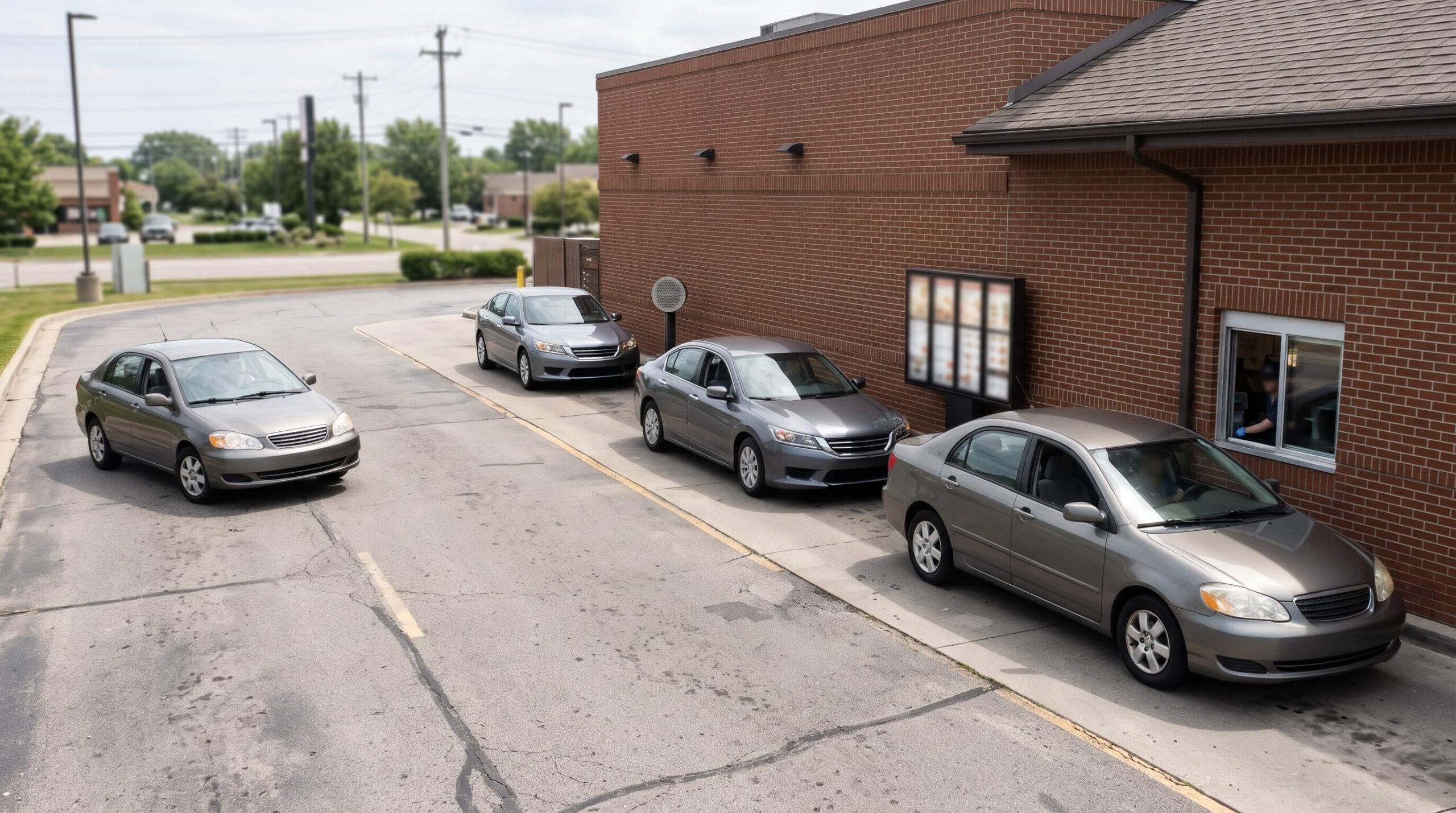
- Rush volume. Send cars through back to back and watch for slowdowns or dropped orders.
- Menu changes. Ask the Hi Auto team to set up a promotional item and a price change mid-shift, then check both show up at the lane.
- Item outages. Mark an item unavailable in the middle of a rush. Out-of-stock sync is currently live on PAR Brink and Oracle MICROS Simphony only, so ask the Hi Auto team how it works on your POS.
- Spanish-language orders. Test automatic detection and a mid-order switch. Hi Auto supports English and Spanish and is live in the US, Australia, New Zealand and the UK.
Hi Auto’s pilot is typically live in about 8 weeks, and the path from pilot to scale runs 90-120 days. That is enough time for an IT team to validate the system under real conditions before committing the chain.
Judge the system by its hardest orders
Most demos show the easy order: one item, clear audio, a patient guest. The real test is the idling truck, the guest who changes the order twice, the item that ran out and the voice from the back seat.
Here is the checklist this guide builds toward:
- Clear audio, tested at a real speaker
- Speech recognition tested in a real lane, not a quiet room
- A conversation that holds several turns without losing the order
- Completion and accuracy reported together, with clear definitions
- POS injection, with menu and price changes set up by the Hi Auto team
- Results that hold across many stores, not one good pilot
The chains that scale AI well ask the hard questions before the pilot, not after.
Next step: score vendors with the Buyer’s Guide
Hi Auto’s Buyer’s Guide includes an evaluation matrix your team can use to score any vendor against these design questions. Read the Buyer’s Guide, then talk to the Hi Auto team about what a pilot looks like for your chain.