TL;DR: Every drive-thru voice AI eventually meets an order it cannot confidently understand. Those edge cases are real, frequent, and unavoidable at chain scale. Human in the loop decides what happens when the AI’s confidence drops.
INTRODUCTION
Every drive-thru voice AI eventually meets an order it cannot confidently understand. Those edge cases are real, frequent, and unavoidable at chain scale.
Human in the loop decides what happens when the AI’s confidence drops. Done right, a trained Hi Auto supervisor sends a digital input that guides the AI, and the experience stays seamless for the guest and the restaurant. Done wrong, the crew gets pulled in for every hard order, or the system guesses and pushes a wrong order to the POS.
This guide covers what edge cases actually look like in a drive-thru environment, why they multiply across hundreds of locations, and what separates a fallback that protects the guest experience from one that quietly creates problems.
Introduction: The Second After the AI Meets a Hard Order
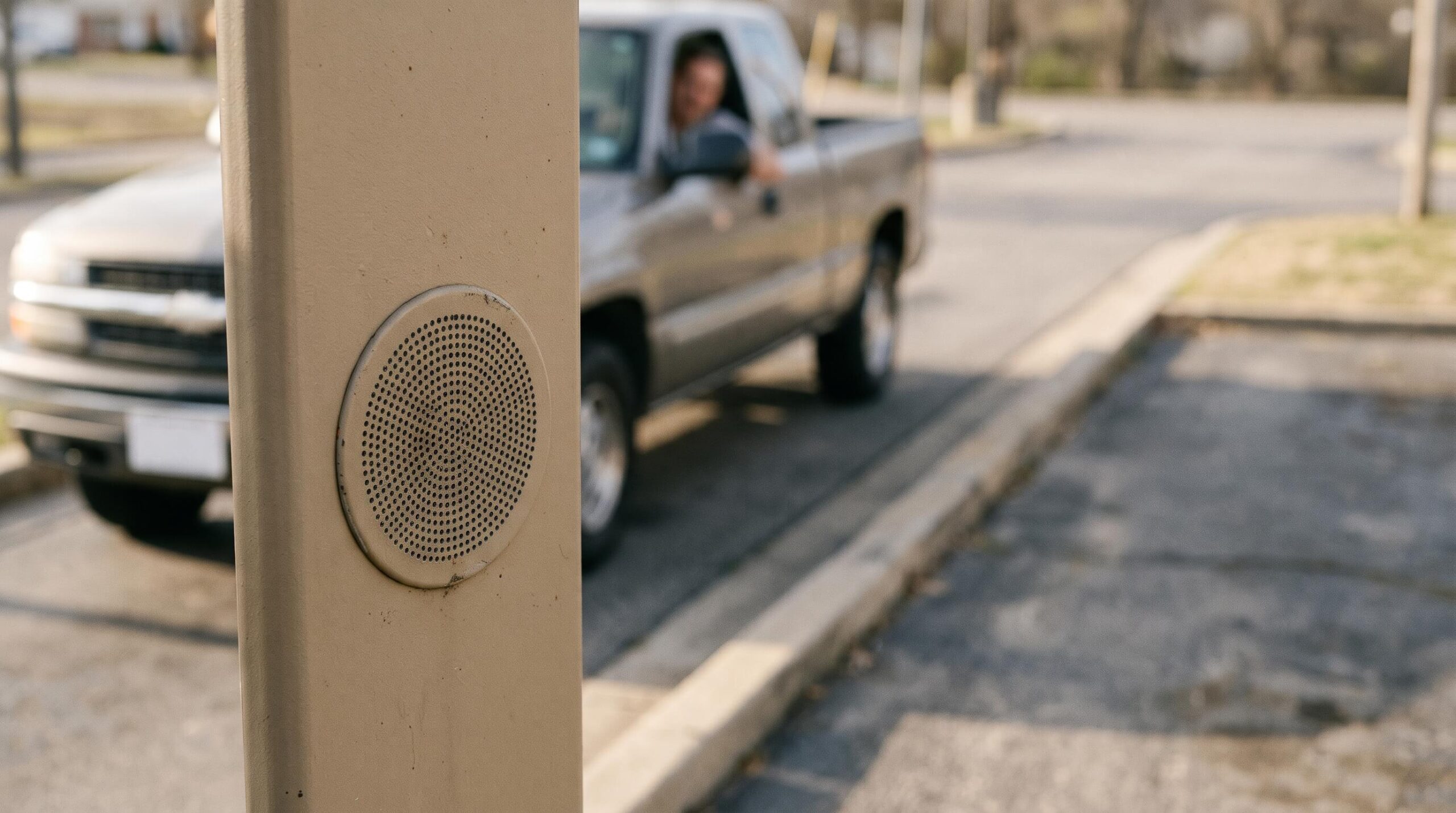
A car pulls up to the speaker post. Behind it, a diesel pickup idles loud enough to rattle the menu board. Three kids in the back seat are calling out different items. The guest at the mic has a thick regional accent and wants to swap a side that isn’t on the menu.
The AI is processing. What happens in the next second determines whether that order completes cleanly or falls apart.
For a single-store operator, that moment is an inconvenience. For an IT leader running 300+ locations, it’s a chain-wide operational question. The answer you get from a vendor shapes throughput, accuracy, and crew workload across every lane, every shift.
This guide focuses on the mechanism: what drive-thru edge cases actually are, how they build up across a chain, and what the three kinds of system response look like order by order.
What Counts as an Edge Case at the Drive-Thru?
An edge case is any moment where the AI’s confidence drops below the threshold needed to complete an order accurately without help. That moment happens more often than most pilots reveal.
- Accent and dialect variation. Regional American accents, non-native English speakers, and guests who code-switch between English and Spanish all create recognition uncertainty. A system trained on a narrow speech-pattern slice will fail predictably for everyone outside it.
- Noise interference. Diesel engines, wind, rain, a car radio. The Lombard Effect compounds this: guests instinctively speak louder in noisy environments, shifting pitch and articulation in ways that can make recognition harder for systems not built to expect it.
- Multiple simultaneous voices. A family with kids calling out separate items, or a passenger leaning across to add something. The AI is listening for one primary speaker and gets a chorus.
- Off-menu requests. Discontinued items, regional variants, something from another location. The guest is confident; the menu doesn’t agree.
- Complex modifier stacks. “No ice, extra sauce, swap the bun for a lettuce wrap, add bacon, make it a large” delivered in one breath. Each modifier is reasonable alone; stacked together, they test any system.
- Item outages. The fryer went down ten minutes ago. The AI must recognize the item is unavailable, communicate that gracefully, and redirect without creating a dead end.
- Mid-order changes. A guest revises an item already added (quantity, size, or modifier) and the order must update without losing everything else in the cart.
- Guest questions. Inquiries about ingredients, allergens, or nutrition are service interactions the AI must handle or escalate cleanly.
No store avoids all of these. The only question is what the system does in the second after it meets one.
Accent and Dialect Variation
Your drive-thru guests don’t speak one dialect. Southern drawls, Creole-influenced speech, rapid Spanish-English code-switching, and hundreds of regional variations show up at the speaker post every day. A system trained on standard American English will misfire on most of them, turning a routine order into a frustrating loop of repeated clarifications.
Accent recognition is one of the most common edge cases. Hi Auto supports both English and Spanish with automatic language detection and switching, so bilingual guests don’t have to choose a language before they order.
Noise, Outages, and Everything Else
Noise handling is the baseline challenge: diesel engines, wind, rain, and a car radio can all hit the microphone at once, degrading transcription before a single word is processed. Item outages add another layer, the AI has to redirect a guest gracefully instead of accepting an order the kitchen can’t fill. Modifier complexity compounds that: “no pickles, extra sauce, grilled not crispy” is a normal Tuesday request. Off-menu requests arrive without warning.
These categories don’t take turns. A guest with a thick accent, ordering in a noisy lane, asking about a modifier on an item that sold out ten minutes ago, is not a hypothetical. That’s the lunch rush.
Why Edge Cases Dominate at Scale
A low edge-case rate sounds manageable, until you picture it at chain scale.
Hi Auto’s AI Order Taker processes 100M+ orders per year. At that volume, even a small share of hard orders adds up to a large number of hard moments every day, which makes edge cases a volume question that needs a system answer.
Pilots hide this. Scale exposes it. A 10-store pilot can look clean because stores were hand-picked, the team is watching closely, and edge cases haven’t accumulated into visible patterns. When a rollout hits 200 stores across varied geographies and demographics, the real edge-case rate surfaces fast.
Reliability at scale is about what the system does on the hard days, order after order, store after store.
Three Things That Can Happen at the Hard Moment
When a voice AI hits its confidence limit, the next second shapes the guest’s experience. There are three ways it can go: the crew steps in, the system guesses, or a trained supervisor resolves it.
1. The crew steps in
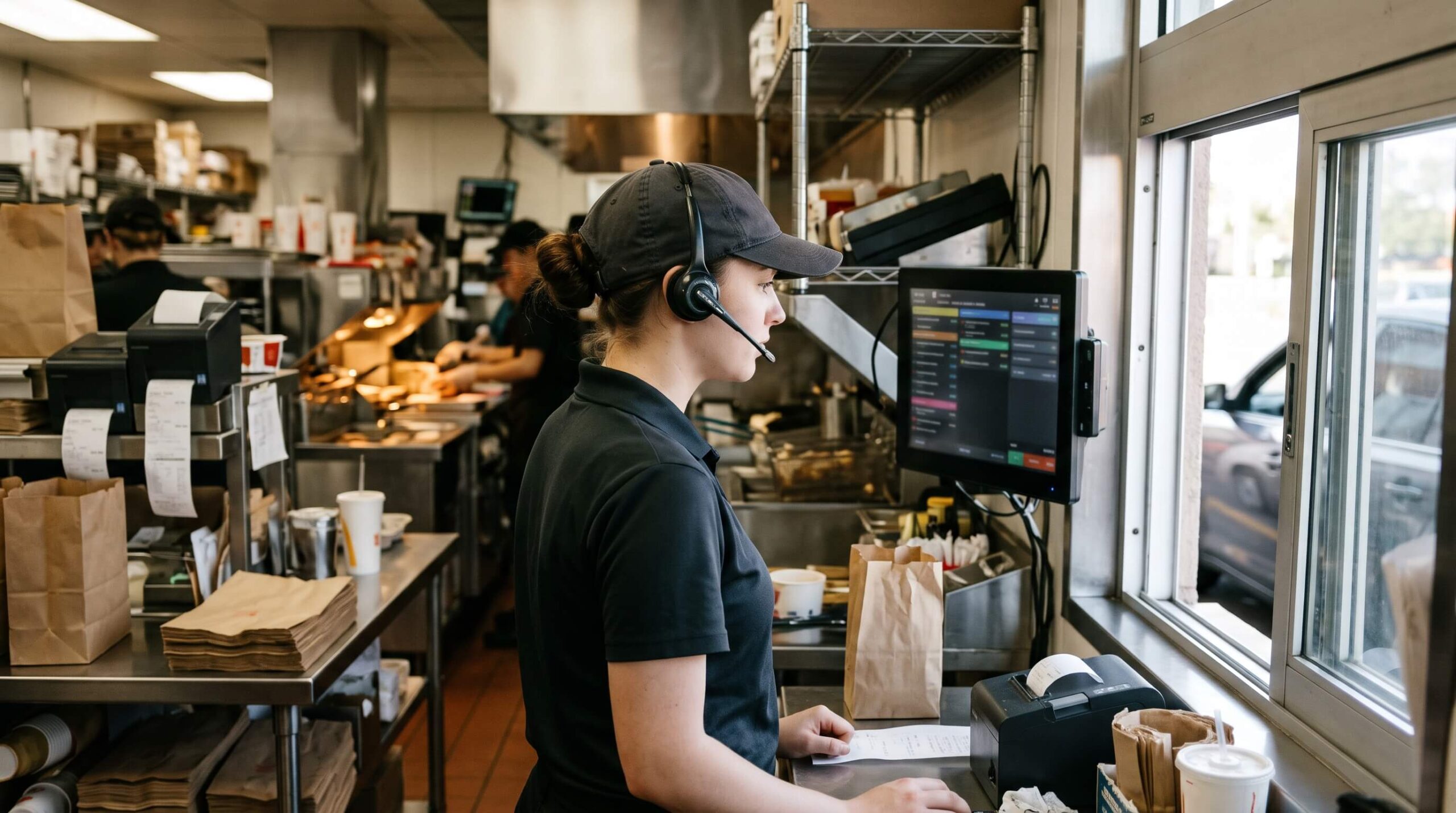
The AI transfers the conversation to a crew member on the headset. The guest hears a pause or a polite “one moment please.” The crew member, who may be mid-task at the fryer, has to context-switch, pick up an order they didn’t hear from the start, and complete it under pressure.
- For the guest: a noticeable interruption, often with repeated questions about items already stated
- For the crew: an unpredictable pull away from food and hospitality tasks at exactly the wrong moment
- For accuracy: entirely dependent on crew availability in that specific second
2. Guess and hope
Without a backup, a system can make a best-guess interpretation and push the order to the POS. If the guess is wrong, the error surfaces at the window: a remake, a delay, a frustrated guest, and a crew member fixing a problem that’s harder to resolve than the original edge case.
- For the guest: a potentially wrong order discovered too late to fix cleanly
- For the crew: a downstream fire that costs more time than a clean resolution would have
- For accuracy: structurally broken, because the error is baked in before anyone notices
3. A trained supervisor resolves it
When the AI cannot confidently determine what the guest wants, a trained Hi Auto supervisor sends a digital input that guides the AI, and every one of those moments also helps train the model. The guest experiences one continuous conversation, and the crew is not pulled in.
- For the guest: seamless, the conversation continues without interruption
- For the crew: no impact; they stay on food and the window
- For accuracy: a trained supervisor resolves the ambiguity before the order reaches the POS
| Crew steps in | Guess and Hope | Trained supervisor | |
|---|---|---|---|
| Guest experience | Noticeable pause, possible repetition | Smooth, until the window | Seamless, continuous |
| Crew impact | Pulled off task mid-rush | None upfront, chaos later | None |
| Accuracy risk | High (depends on crew) | High (baked-in error) | Low (resolved before POS) |
The third outcome is what a hybrid AI architecture with a built-in fallback system looks like in practice.
How Hi Auto Handles the Hard Moment
Hi Auto’s AI handles the order. When it cannot confidently determine what the guest wants, a trained Hi Auto supervisor sends a digital input through the platform that guides the AI. It is not a verbal or manual takeover. Every one of those moments is also used to train the model at scale, and the process is seamless to the guest and the restaurant.
Crews no longer take the order, but they should keep listening in case a rare request for help comes up. The supervisor handles the hard moment, so the crew stays on food and the window.
If there is an internet outage, a system issue or a difficult guest, the crew gets a headset message within seconds prompting them to take over the order.
Hi Auto processes 100M+ orders per year, with 93%+ completion and 96% accuracy and a 1.52-second average response time. Completion is the percentage of orders sent to the POS without staff intervention. Accuracy is the percentage of orders sent to the POS with every item and customization exactly right. Hi Auto handles English and Spanish with automatic language detection.
José Armario, CEO, Bojangles, speaking at the QSR webinar “AI Order Taker That Works: The Bojangles Model,” July 2025:
“The beauty of this technology is that we haven’t missed a beat when it comes down to the ability for this technology to interact as friendly, as effective, as efficient as a human person.”
Watch the QSR webinar, AI Order Taker That Works: The Bojangles Model.
For an IT leader evaluating a chain-wide rollout, that matters: the same process runs across more than 1,000 stores today.
What This Means for the Crew
Operators ask this before IT leaders do: does this make my crew’s day harder or easier?
It’s a fair concern. When a voice system’s fallback routes to the crew, every edge case pulls someone already managing food, timing, and the window. During a lunch rush, that context switch slows throughput and adds stress to an already stretched shift.
With Hi Auto, the crew is not pulled in to resolve edge cases. A trained Hi Auto supervisor resolves them through the platform, so the crew can stay on food and the window. Crews no longer take the order, but they should keep listening in case a rare request for help comes up.
“From day one the biggest thing I noticed with having Bolinda in there, was that the crew members felt a sense of relief.”
Neil Pathak, Owner, Star Enterprises, a Bojangles franchisee. “Star Enterprises deploys BoLinda and sees benefits” (Bojangles franchisee video), 2025. Watch the Neil Pathak clip on Hi Auto’s videos page.
Hi Auto reports turnover reductions of 15 to 30%, measured before and after deployment against a control group, along with 3-8 labor hours saved per store per day. For an IT leader making the case to a CFO or COO, lower turnover means lower training costs and more consistent execution, a measurable part of the ROI story.
Reading the Numbers Behind the Fallback
Completion and accuracy show how a voice AI is really performing, and they only make sense together.
Hi Auto defines completion as the percentage of orders sent to the POS without staff intervention. Accuracy is the percentage of orders sent to the POS with every item and customization exactly right. Hi Auto reports 93%+ completion and 96% accuracy.
For IT leaders building an evaluation, Hi Auto’s Buyer’s Guide includes an evaluation matrix for comparing vendors on completion and accuracy together.
Judge a Voice System by Its Hardest Moments
A clean order in a quiet pilot tells you almost nothing. The number that matters is what happens when the AI meets a thick accent over a diesel engine, an item that sold out ten minutes ago, or a modifier stack that would trip up a seasoned crew member.
Those moments happen every shift, in every store.
Bojangles tested for them first. Richard Del Valle, Chief Information Officer and Chief of Staff, Bojangles, said at the July 2025 QSR webinar that his team tried loud music, loud cars and people yelling in the back seat before moving ahead, and that the technology still heard the person it needed to hear.
The three outcomes (the crew steps in, the system guesses, or a trained supervisor resolves it) lead to very different results for the guest, the crew, and accuracy. The gap is hard to see in a pilot. It shows up at store 50 or store 200, when pressure is real and the margin for error is thin.
For an IT leader, the hard moments are the part of a voice AI deployment worth understanding in detail.
Hi Auto’s Buyer’s Guide includes an evaluation matrix for reviewing a voice AI deployment at chain scale.
CONCLUSION
Every voice AI system looks capable in a clean demo. The real test is what it does when confidence drops mid-order. With Hi Auto, a trained supervisor sends a digital input that guides the AI, and the experience stays seamless for the guest and the restaurant.
Next Step: Read Hi Auto’s Buyer’s Guide
Hi Auto’s Buyer’s Guide includes an evaluation matrix for reviewing a voice AI deployment at chain scale. Download it to build your own checklist.