TL;DR
- Order accuracy and order completion are two halves of one result. Hi Auto processes 100M+ orders per year and reports 93%+ completion AND 96% accuracy, averaged across more than 1,000 live stores.
- An order comes out right in the lane because of four things: clear hearing through noise, modifier handling, a live menu and a confirmation board the guest can read.
- Independent 2026 mystery-shop research named customization requests and questions as the points where voice AI could not continue the order at some of the drive-thrus shopped, so look closely at how any accuracy and completion figure is defined and measured.
- Accuracy is a habit you maintain across menu changes and seasons. It is more than a launch-day number.
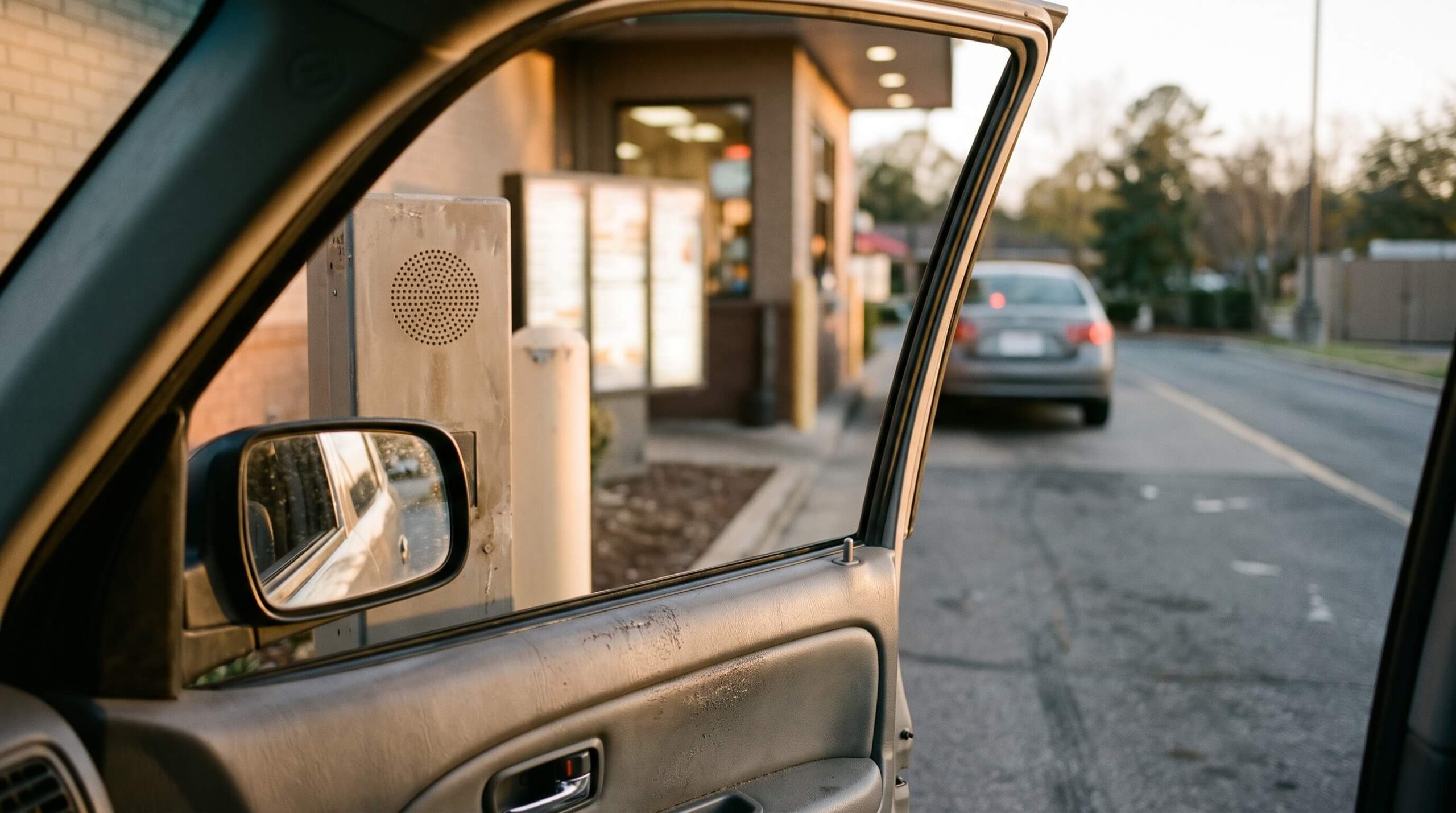
A guest pulls up to the speaker and starts with a burger. Halfway through, they switch to a chicken sandwich, ask for no pickles and extra sauce, and a child in the back seat calls out a different drink. Then the guest says, “Actually, make that a large.”
Getting that order right is what order accuracy measures: whether every item, quantity and modifier in the finished order matches what the guest asked for. Getting it right once is a good sign. Getting it right in every daypart, through every menu change and in every noisy lane is the real test, and it is the one you will face after the pilot ends.
Accuracy and completion: two halves of one result
Completion rate is the percentage of orders sent to the POS without staff intervention. Accuracy rate is the percentage of orders sent to the POS with every item and customization exactly right. You need both, because either one can look strong at the expense of the other.
A system can post a high completion rate by finishing orders that contain mistakes. It can also post a high accuracy rate by sending every uncertain order to staff, so only the easy ones count. Neither number tells you much alone.
That is why Hi Auto always states the two together: 93%+ completion AND 96% accuracy, as an average across all live stores rather than a best-store number. The order completion rate page in our glossary covers the definitions.
Hi Auto’s Buyer’s Guide sets a 90% completion threshold and advises buyers to ask every vendor for its measurement method. How a number is calculated matters as much as the number.
What makes an order come out right in a lane?
Four things have to work together for the order in the opening scene to land correctly.
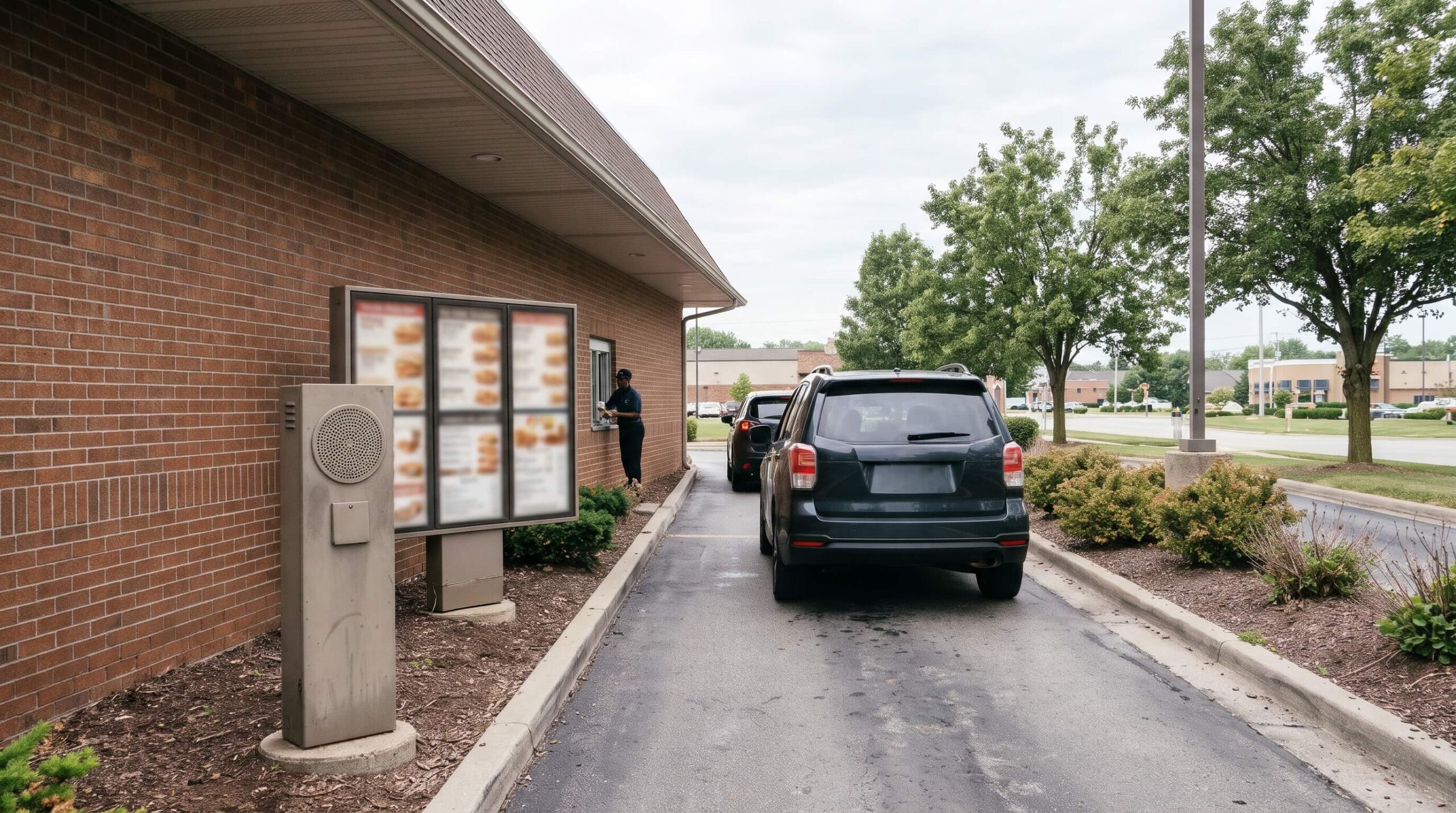
Hearing clearly through outdoor noise. A drive-thru is a hard place to listen. Wind, idling engines, a radio in the back seat and a voice from a half-open window all reach the microphone together. Noise handling is what separates a system that works in a lane from one that only works in a quiet demo room. Hi Auto uses its own audio filtering and speech recognition at the order point. Ask any vendor how its first pass performs in a real lane, and look at the first-time recognition rate.
Handling modifiers and mid-order changes. “No pickles” that gets missed is a wrong order. Modifier handling covers removals, additions and substitutions, and it has to keep up when a guest changes their mind mid-sentence. The user correction rate shows how often guests have to step in and fix something, so it is a useful number to request.
Matching the order to the live menu. A system that hears every word can still produce a wrong order if it works from last week’s prices or an item that just sold out. New menu items are set up by the Hi Auto team as a managed partnership, so what the guest is offered matches what the store is selling.
Letting the guest catch a mistake. The order confirmation board shows items, modifiers and prices as the guest speaks. If “no pickles” is missing, the guest sees it and corrects it in the moment, before the car moves forward.
Bojangles has run this at scale, and its CEO described the experience this way.
“The beauty of this technology is that we haven’t missed a beat when it comes down to the ability for this technology to interact as friendly, as effective, as efficient as a human person.”
Jose Armario, CEO, Bojangles. QSR webinar AI Order Taker That Works: The Bojangles Model, July 2025. Watch the QSR webinar: Armario on friendly, efficient ordering
What does independent data say about accuracy?
Intouch Insight’s 2026 Drive-Thru Study sent mystery shoppers on 120 visits to locations of three national QSR brands running voice AI in June and July 2026. QSR Magazine’s 2026 Drive-Thru Report (Danny Klein, 1 October 2026) reports that, among the 15 drive-thrus shopped where the technology began the order and passed it to a person, the AI could not understand a customization request in 53.3% of cases and could not answer a question in 40%.
Read those figures the way you would read any independent benchmark. In Intouch Insight’s own report, order accuracy at the voice AI locations shopped was 90.8%, against 86.7% for the same brands in the main study. The figures cover three brands and their systems. They are measured differently from Hi Auto’s own numbers, so the two should not be compared. The study also notes that the AI locations were chosen rather than randomly assigned, so the figures describe what shoppers found rather than proving cause. Together they show why the way a number is defined and measured matters as much as the number itself.
How a number is counted shapes both of yours. A system that pushes through low-confidence orders can protect its completion rate at the cost of accuracy. A system that sends too many uncertain orders to staff can protect accuracy while understating how often a person gets pulled in.
This is where the design of the fallback system matters. With Hi Auto, the AI handles the order. When it cannot confidently determine what the guest wants, a trained Hi Auto supervisor resolves it instantly through the platform, and every one of those moments is used to train the model further. The process is seamless to the guest and the restaurant.
For a fuller vendor checklist, see our guide Voice AI for Drive-Thru: A Technical Evaluation Guide for QSR IT Teams.
What keeps accuracy high after launch?
Reaching a strong accuracy number on launch day is the easy part. Holding it six months later, after three menu changes and a summer promotion, is the harder job.
Three things cause drift after launch:
- Menus, prices and limited-time offers change. If the system works from an out-of-date menu, accuracy drops, even though the AI itself has not changed. New menu items are set up by the Hi Auto team as a managed partnership. Scripts, voice and offers are also set up by the Hi Auto team.
- Noise changes with the season and the daypart. A summer afternoon with the windows down sounds very different from a quiet winter morning. Hi Auto’s AI keeps improving and is actively managed by the Hi Auto team, so performance can keep pace with those conditions.
- Every store is its own lane. A chain with hundreds of locations has hundreds of traffic patterns, local menus and crew set-ups. Sustained accuracy has to hold across all of them, well beyond the pilot stores.
Bojangles’ CEO pointed to that last test when he described what franchisees did after trying the system.
“99% of the franchisees that have tried it have stuck with it.”
Jose Armario, CEO, Bojangles. QSR webinar AI Order Taker That Works: The Bojangles Model, July 2025. Watch the QSR webinar: Armario on franchisee adoption
How do you track accuracy without fooling yourself?
A single accuracy figure on a slide can hide a lot. These five checks help you read any vendor’s numbers, Hi Auto’s included.
- Ask for the definition and the sampling method. An order counts as accurate only if every item, modifier and price is right. Item-by-item counting produces a higher number for the same orders.
- Ask for the average across all live stores. A best-store number or a quiet-daypart number will always look better than the fleet.
- Review completion and accuracy side by side. Either one alone is half a story.
- Look at trends over weeks. A four-week trend shows whether the system holds through menu changes, weather and busy periods. A single day can be a good day.
- Ask what is left out of the number. If orders are removed from the calculation, whether by daypart, store or order type, the number will look better than the guest’s experience.
If a vendor cannot tell you exactly how it defines and samples its accuracy figure, you have learned what you needed to know.
Accuracy is a habit, not a launch-day number
An accurate drive-thru is something you earn again with every menu change, every limited-time offer and every change in the weather. The IT leaders who get the most from voice AI review completion and accuracy together, over time, and they hold the system to the same standard in month twelve as in month one.
The guest at the speaker wants the order they asked for, and everything above is in service of that moment.
How to put this standard to work
To evaluate voice AI with that standard, start with the Buyer’s Guide evaluation matrix, then talk to the Hi Auto team about what sustained accuracy looks like across more than 1,000 stores.