TL;DR
- Drive-thru throughput is the number of cars a lane can serve in an hour, and the slowest station sets the ceiling.
- Find the jam first: the order point, the kitchen, payment and handoff, or the window. Change one thing at a time and measure it over a full peak.
- The order point has to answer every car immediately, often while one person also runs food, cash and the window. Hi Auto greets typically within 3-5 seconds, with 93%+ completion and 96% accuracy across ~1,000 stores.
- Ask any vendor for completion and accuracy at the peaks, as an average across all live stores.
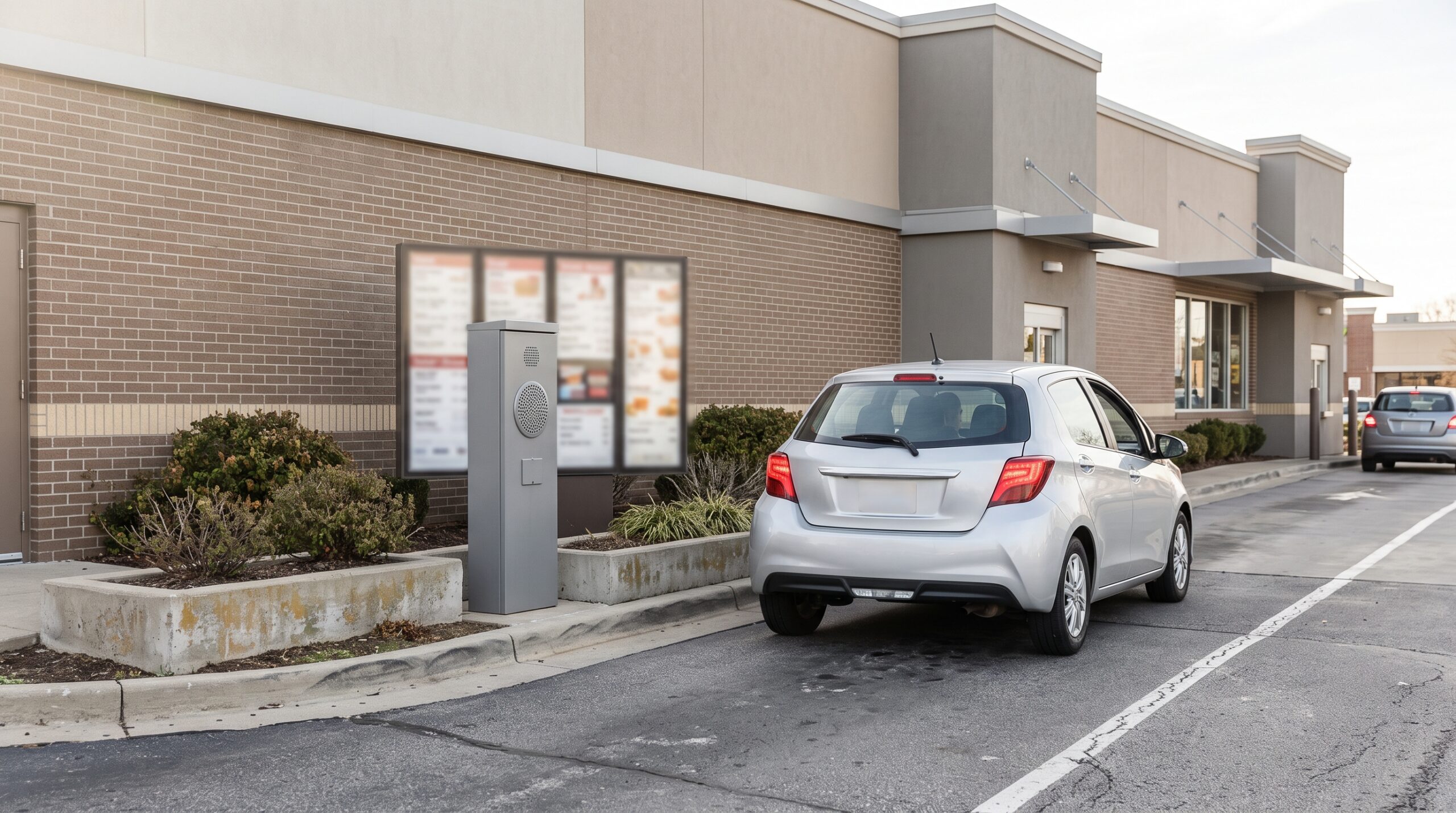
It is Friday, 12:15 p.m. Five cars are in line. The third one has been at the speaker for a while, and the two behind it have not moved in a minute and a half.
Nobody is doing anything wrong. The crew is working and the kitchen is running. One station is a little slower than the rest, and that single lag sets the pace for every car behind it.
That is a throughput problem. This guide is about capacity: where a lane jams, which constraint to fix first, and what to change. How fast each car is served is a different question, and we cover it in our speed of service article. Here we stay on cars per hour.
Why one jam sets the ceiling for the whole lane
Picture a garden hose with a kink in it. The flow is set by the narrowest point, and the pressure behind the kink does not matter.
A drive-thru lane works the same way. If cars spend longer at the speaker than the kitchen needs to make the food, a faster kitchen adds no cars per hour. Improving a station that is not the constraint does not raise capacity.
This is also why a daily average can hide a problem. A lane that looks fine across a whole shift can slow down every day between 12:00 and 1:00 p.m. Peak-hour performance is the real test, because that is when the constraint carries the most load and the line behind it grows fastest.
So the first job is to find where your lane jams.
Step 1: Find where your lane jams
Before you change anything, watch the lane. One observation during high-volume periods tells you more than a month of guessing.
Stand where you can see the whole lane, or pull up your own timer data if you have it, and note where cars wait longest. Then check four points:
- The order point. How long does a car sit from pull-up until the order is complete? If cars wait at the speaker while the line grows, this is your jam.
- The kitchen. Are cars finished ordering but sitting at the window, waiting for food to come up? This is a kitchen constraint.
- Payment and handoff. Is the food bagged and ready while the transaction takes time? Payment can hold a car even when the kitchen keeps pace.
- The window. Are there missing items, a second trip to the kitchen or a re-bag during handoff? Small delays add up when a long line is waiting.
Change one thing at a time. If you change the order point routine, the staffing rotation and the bagging routine in the same week, you will not know which one moved the number. Make one change, run it for a full peak, then measure.
The aim is a clear answer to one question: which station is setting the ceiling right now?
Step 2: Clear the order point
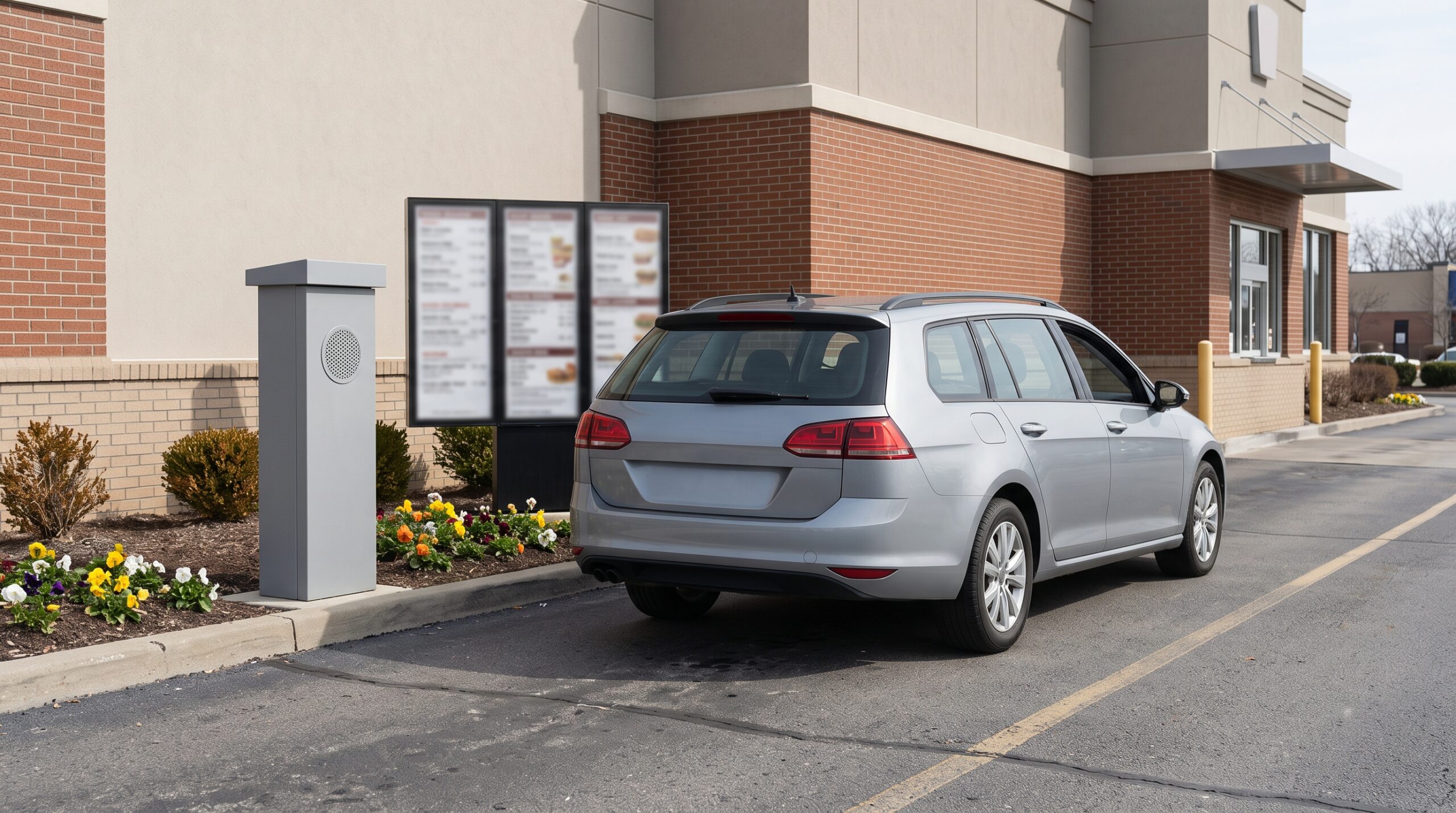
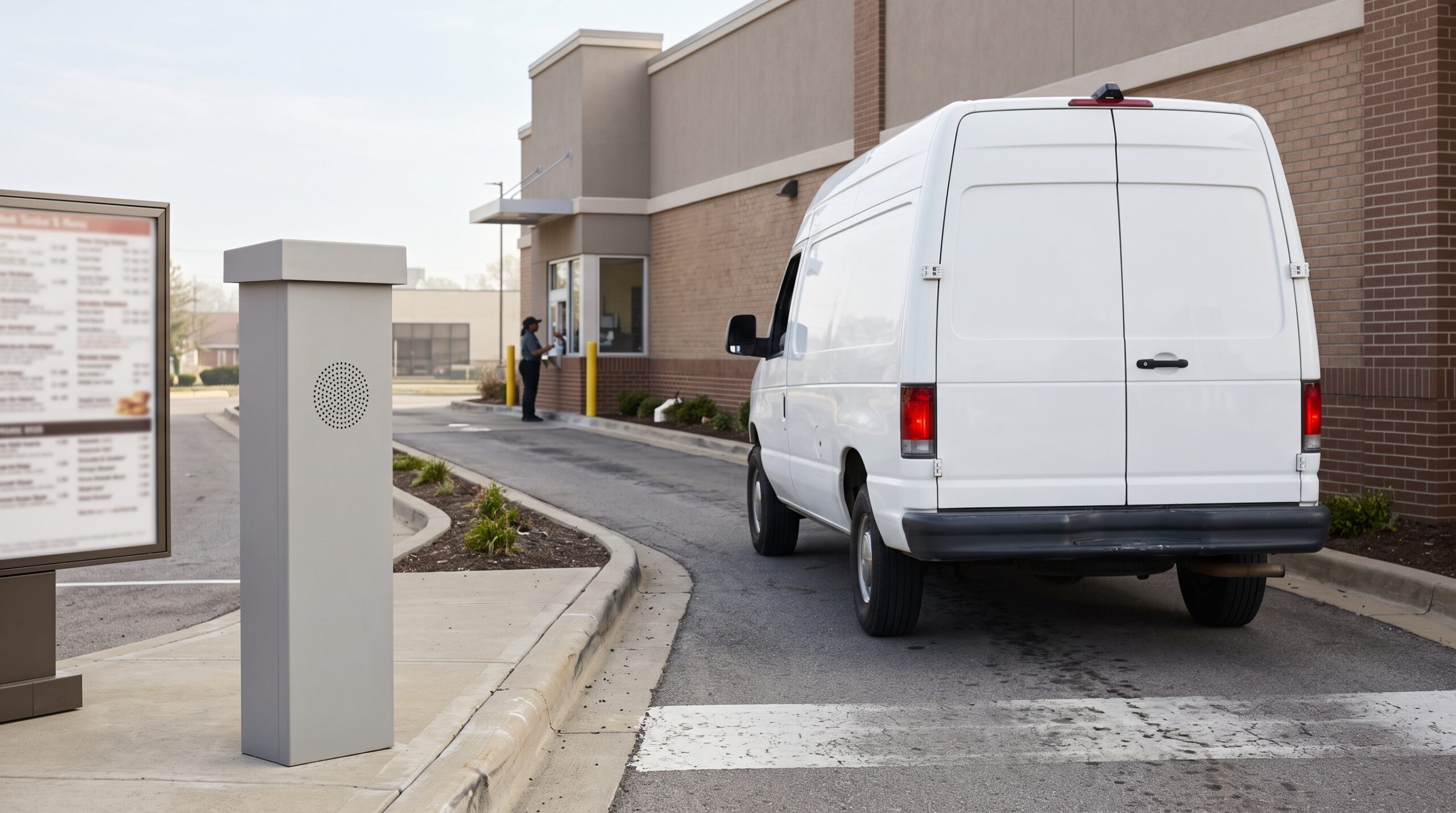
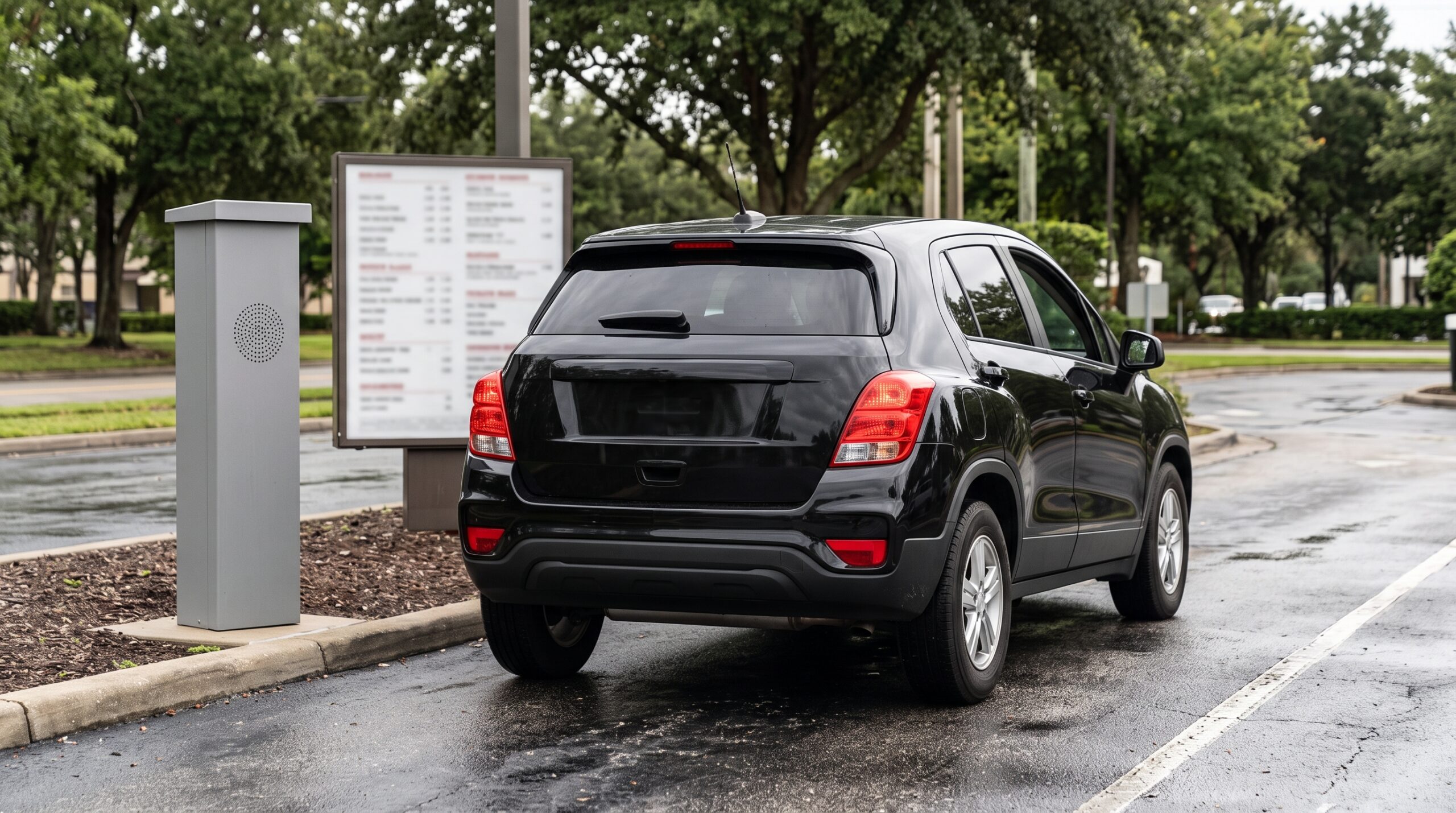
The order point is the hardest station in the lane to buffer. It has to answer every car the moment it arrives, with no queue and no way to batch the work. At the lunch and dinner peaks, the same station is often handled by one person who is also doing food, cash and the window. That is a job design load. Effort does not solve it.
Three tactics help without adding headcount:
- Keep the menu board simple at peak. Fewer visible choices mean faster decisions at the speaker.
- Give the order point one person during the rush, if your staffing allows it. Separating the role from food and cash relieves the constraint fastest.
- Use an order confirmation board. When guests see their items appear as they speak, they can correct a slip on the spot, which helps cut re-asks.
AI order taking is another option, and it fits this station well because the order point is the one place that has to respond to every car immediately. Hi Auto’s greeting typically lands within 3-5 seconds and its average response time is 1.52 seconds. Across ~1,000 stores, Hi Auto reports 93%+ completion and 96% accuracy. The system is AI-powered order taking with human backup when needed, so an order it cannot confidently resolve still gets finished correctly, in the moment.
Linda Ronda, a store general manager at Checkers, described what changed at her order point:
“Before we used to have to stress on trying to run to the front and answer the speaker for the guests and ring up orders and stuff but now we can do other things and be able to say and still pay 100 attention to the guests at the window.”
Linda Ronda, Store GM, Checkers. Hi Auto customer video, 2025. Watch the clip
When the order point is no longer competing with everything else, the next jam usually becomes visible.
Step 3: Free hands in the kitchen and at handoff
Once the order point moves, the kitchen and handoff are often where the line waits next. The pressure here comes from switching between tasks. When one person is pulling food, managing payment and watching the window at the same time, every task slows down.
Three tactics help:
- Overlap orders. Start prepping the next order while the current car is still on its way to the window. This works best when the order is captured cleanly the first time.
- Stage before the rush. Pre-portion and pre-wrap your high-frequency items where brand standards allow. Fifteen minutes of preparation before the peak beats scrambling through it.
- Give each station one clear job. During high-volume periods, single-task roles keep hands moving. Rotate between rushes, not during them.
If you run a double-lane drive-thru, overlapping orders becomes part of the design. Two lanes feeding one kitchen means prep and handoff roles need to be set before the first car arrives, not after the line backs up.
Richard Del Valle of Bojangles described what happens when order taking comes off a crew member’s plate:
“We’ve taken employees that were doing three tasks before, order taking, fulfilling, and cashiering, and taken 33% of the work of the tasks away, but probably 50% of the work.”
Richard Del Valle, CIO, Bojangles. QSR webinar “AI Order Taker That Works: The Bojangles Model”, July 2025. Watch the clip
Hi Auto reports 3-8 labor hours saved per store per day. That time can move to the stations that need hands, such as the kitchen, the bagging area and the window.
Step 4: Keep the window moving
The window is the last gate before a car leaves the lane. Everything upstream lands here, so if the window slows, the lane slows with it.
The goal is less friction, not more speed. Three habits help:
- Bag ahead. Finish bagging while the previous car is still at the window, so the bag is ready when the next car pulls up.
- Use one handoff sequence. The same steps in the same order every time cut the small decisions that add seconds to each car.
- Stage the payment step. Have the terminal and change ready before the car arrives, so payment is not the moment the line stops.
The window is a shared load. A crew member who is answering the speaker and serving the guest in front of them is being asked to do two jobs at once. Neil Pathak, who owns a Bojangles franchise, noticed how quickly that changed once AI order taking arrived:
“From day one the biggest thing I noticed with having Bolinda in there, was that the crew members felt a sense of relief. The person that used to do cash, take orders, make drinks, they’re just so relaxed now compared to before.”
Neil Pathak, Owner, Star Enterprises (a Bojangles franchisee). Hi Auto customer video, 2025. Watch the clip
A crew with more room at the window has more attention for the guest and the bag. That is a practical input to a lane that keeps moving.
What to ask any vendor about peak hours
Before you sign anything, ask what a vendor’s completion and accuracy are, averaged across every live store, during peak hours. Ask for the whole portfolio, not the best location or a pilot site. A strong result at one flagship store can look quite different across a real multi-unit rollout.
Hi Auto’s Buyer’s Guide advises asking any vendor for the measurement methodology behind their numbers, not only the headline figure. A few questions to bring:
- What are your completion and accuracy, averaged across all live stores? The two numbers belong together. One without the other tells you half the story.
- How do those numbers look at the peaks? A system that performs well on a quiet Tuesday afternoon needs to hold up at 12:15 on a Friday.
- How do you define completion? Ask whether accuracy is measured at the item level or the order level, and whether peak-hour data is reported on its own or blended into an all-day average.
- How is an order handled when the system is not confident? The right answer finishes the order correctly, in the moment.
- How long from pilot to scale? For Hi Auto, a pilot goes live in about 8 weeks and getting from pilot to scale takes 90 to 120 days.
On speed, Intouch Insight’s 2026 Drive-Thru Study found that total visit time at locations of three national QSR brands running voice AI was 5:14, against 5:15 for the same brands in the main study. The wait before ordering was 11.1 seconds shorter, and the time from placing the order to leaving was 10.2 seconds longer. That is a finding about time per car, and it is not a cars-per-hour figure. Where the order point is the bottleneck, freeing it can leave room for more cars, but your own constraint decides how much. For what speed of service measures and how to read it, see the glossary.
The Hi Auto product page describes how AI order taking works in a drive-thru, and the Buyer’s Guide includes an evaluation matrix for comparing vendors on exactly these points.
The shift in thinking: fix the slowest station first
Many franchisees try to improve every station at once, or they start with the most visible one, usually the window, because that is where the guest interaction ends. The practical answer is simpler. Throughput is set by the slowest station, so improve that one first.
The order of work is the same each time. Observe one peak. Note where cars wait longest. Fix that one thing. Measure. Then move to the next constraint.
Technology earns its place when it addresses the station that is actually holding the lane back. At the peaks, that is often the order point, the one station that must respond to every car immediately. Where that is true for your stores, AI order taking gives that station a dedicated answer for every car and gives your crew room to work.
Call to action
Read the evaluation matrix in the Hi Auto Buyer’s Guide: AI for the Drive-Thru, then talk to the Hi Auto team about how AI order taking performs across ~1,000 live stores. Bring your peak-hour questions and your slowest station, and start there.
Open items for Hi Auto
- Please confirm the spelling of Richard Del Valle’s name before publishing.
- Please confirm that Hi Auto supports double-lane sites, so the double-lane glossary page can be linked as a supported scenario.
- Please confirm whether any peak-hour reporting exists that can be mentioned in this article.
- Please confirm the figures from Intouch Insight’s 2026 Drive-Thru Study can be cited from Intouch’s own published report, since QSR Magazine’s coverage does not carry all of them and Hi Auto’s sourcing rule favours independent coverage.